Whats Trending in Technology Togtechify: The Big Shifts You Need to Watch Right Now
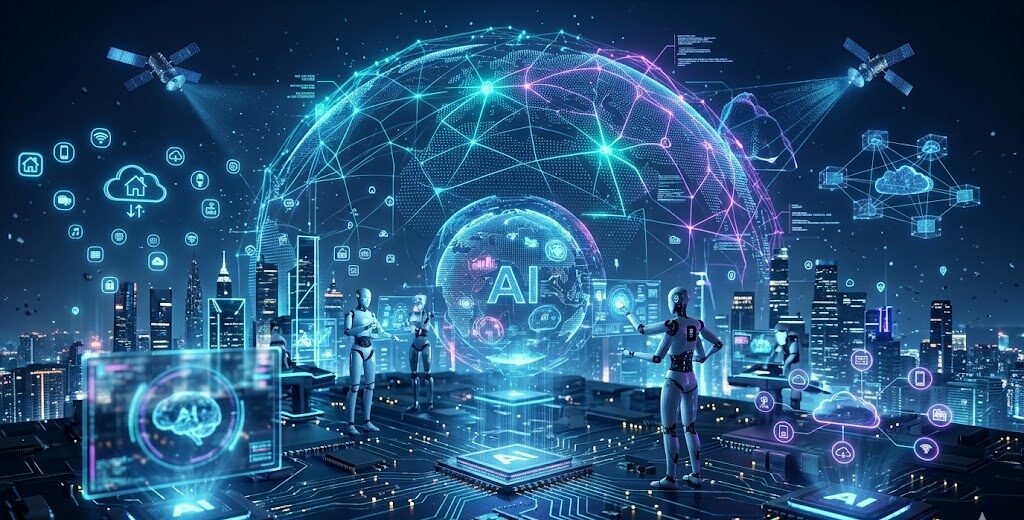
If you have been asking yourself what’s trending in technology togtechify, the answer is simple and exciting at the same time: technology is becoming more intelligent, more personal, more secure, and more connected than ever before. The biggest story is not just that artificial intelligence is growing; it is that AI is now spreading into search, software development, business operations, devices, cybersecurity, and even robotics. Recent industry signals from Gartner and Deloitte show that AI is no longer being treated as a side project. It is becoming the foundation of modern technology strategy, while new areas like multiagent systems, AI security, confidential computing, physical AI, and digital provenance are rising fast.
What makes this moment so important is that the technology trends of 2025 and 2026 are not isolated trends. They are working together. AI is pushing cloud platforms to become more powerful, hardware makers are building devices that can run AI locally, search engines are adding deeper reasoning, and enterprise teams are demanding stronger trust, privacy, and protection. In other words, the future is not one single invention. It is a connected wave of innovation, and businesses, creators, and everyday users are all feeling the change.
One of the clearest reasons this trend is accelerating is that AI has moved from experiment to infrastructure. Deloitte’s 2025 and 2026 technology coverage describes AI as woven into the fabric of enterprise life and increasingly embedded across the organization. Gartner’s 2026 strategic technology trends go even further by highlighting AI-native development platforms, AI supercomputing platforms, multiagent systems, domain-specific language models, AI security platforms, and physical AI as major themes. That combination tells us something powerful: the next phase of technology is not about using AI occasionally. It is about building with AI at the core.
Another reason this topic matters is that consumers are now experiencing advanced technology directly, not just reading about it in industry reports. Google has expanded AI Mode in Search, describing it as a more powerful AI search experience with advanced reasoning, multimodality, and the ability to go deeper through follow-up questions. Apple has also pushed Apple Intelligence across iPhone, iPad, Mac, and Apple Vision Pro, with an emphasis on privacy and on-device intelligence. These are not small product updates. They show that AI is becoming part of everyday digital life, and that changes how people search, create, organize, and communicate.
AI Agents Are Becoming the New Interface of Work
One of the strongest technology trends today is the rise of AI agents. Microsoft said in 2025 that we have entered the era of AI agents, pointing to reasoning and memory improvements that allow AI systems to help solve problems in a more capable way. That shift matters because agents are different from older chatbots. Instead of only answering questions, they can help plan tasks, draft code, review work, trigger workflows, and support decision-making over longer sessions. Microsoft also highlighted how millions of developers are already using Copilot-related tools, showing that agentic experiences are moving into real production use.
This is why so many technology watchers believe the future of software will be agent-first. An agent can act as a layer between people and complex systems, reducing the friction of doing repetitive digital work. Imagine searching for information, generating a report, updating a spreadsheet, reviewing code, and coordinating with a teammate without switching between a dozen tools. That is the promise behind agentic workflows. Gartner’s 2026 trend list reinforces this by naming multiagent systems and AI-native development platforms as strategic priorities, suggesting that companies are preparing not only to use AI tools, but to build whole workflows around them.
For businesses, this trend is especially important because agents may become the new productivity multiplier. A sales team can use them to summarize leads, a marketing team can use them to draft campaign variants, and a support team can use them to triage repeated questions faster. But the trend is not only about speed. It is also about reducing cognitive load. When software can handle routine tasks and suggest next steps, people can focus more on judgment, strategy, and creativity. That is one of the most important shifts in technology right now, and it is likely to continue shaping tools for years.
Search, Productivity, and Everyday Apps Are Getting Smarter
Search is changing in a way that users can feel immediately. Google’s AI Mode is a sign that people no longer want only a list of links. They want a system that understands context, handles follow-up questions, and helps them explore complicated topics more naturally. Google has described AI Mode as an experience built for longer and more complex questions, and it uses advanced Gemini models to support that richer interaction. That means search itself is becoming more conversational, more analytical, and more useful for tasks that once required multiple searches or tabs.
The same thing is happening inside productivity apps. Apple Intelligence is built into core Apple experiences so users can write, summarize, refine text, and get things done more easily while keeping privacy central to the design. That is a strong sign that the future of everyday software is not just about adding AI as a separate feature. It is about weaving intelligence into the tools people already use. When AI becomes part of the default workflow, productivity changes from “using an app” to “working with an assistant.”
This shift is also changing expectations for content creation and digital communication. People now want faster drafts, better summaries, smarter recommendations, and more personalized help. As a result, technology companies are racing to improve reasoning, memory, multimodal understanding, and context handling. That is why models and platforms are being designed around broader tasks rather than isolated prompts. OpenAI’s GPT-5 launch, for example, was positioned around stronger reasoning, coding, writing, and visual understanding, which reflects the broader market direction toward more capable general-purpose AI systems.
AI Is Moving Closer to the Device
A major trend that many people underestimate is the move toward local AI. For years, the big story was cloud AI: massive models running in huge data centers. That is still important, but now the industry is also building devices that can run advanced AI tasks locally. Apple’s on-device foundation models and NVIDIA’s RTX AI PCs and DGX Spark systems are clear examples. These products point to a future where devices do more computing on the spot, with lower latency, better privacy, and more personal control over data.
This matters because local AI changes what users can do offline and what businesses can keep private. Apple says its foundation models are designed to power experiences that are fast, private, and available even when users are offline. NVIDIA similarly positions its AI PC and desktop systems as tools for building and running autonomous AI agents locally. Together, these signals show that the market is moving beyond “AI in the cloud” toward “AI everywhere,” with a balance between remote power and local performance.
For creators, developers, and small businesses, local AI could become a game changer. It can reduce delays, improve privacy, and open up new use cases in editing, analytics, design, and support. It also allows more specialized models to run on devices without sending every request to a remote server. That is why AI PCs and on-device intelligence are being discussed so often now. This is not just a hardware upgrade. It is a new way of thinking about how intelligence should live inside the tools we use every day.
Physical AI, Robotics, and Smart Machines Are Rising Fast
Technology trends are not only moving into software. They are also moving into the physical world. Gartner’s 2026 list includes physical AI, and NVIDIA continues to emphasize robotics, edge AI, and vision AI as core parts of the modern AI stack. That tells us that machines are becoming better at perceiving the world, making decisions closer to where data is created, and interacting with real environments. This is the beginning of a world where AI is not just answering questions on a screen; it is helping robots, cameras, sensors, and industrial systems understand and act in the physical world.
This trend is especially important in manufacturing, logistics, healthcare, retail, and transportation. When AI can interpret images, detect patterns, guide systems in real time, and work with edge devices, it becomes useful in places where speed and accuracy matter deeply. The edge AI approach also helps because not every decision should wait for a round trip to a remote data center. That is why edge computing and vision AI keep showing up in major technology roadmaps. They support faster reactions, better automation, and more reliable operations.
Physical AI is also tied to the growth of digital twins, simulation, and robotics development. NVIDIA highlights these areas across its broader platform messaging, showing that companies are using AI not only to analyze the world but to model it and interact with it. In practical terms, this means future businesses may increasingly rely on intelligent machines that can inspect products, navigate warehouses, assist workers, and monitor systems continuously. That may sound futuristic, but the trend is already underway.
Cybersecurity, Confidential Computing, and Digital Trust Matter More Than Ever
As technology gets smarter, the risks get smarter too. That is why cybersecurity is one of the strongest themes in current trend reports. Gartner’s 2026 list includes preemptive cybersecurity, digital provenance, AI security platforms, and confidential computing. Those terms may sound technical, but the message is easy to understand: organizations need better ways to protect data, verify content, and stop attacks before they spread. In a world full of AI-generated text, images, software, and automations, trust becomes a competitive advantage.
Digital provenance is especially important because users and companies increasingly need to know where content came from and whether it has been altered. This matters for news, creative work, business communications, software artifacts, and AI outputs. If systems cannot tell the difference between authentic and manipulated content, trust breaks down fast. Gartner’s inclusion of digital provenance signals that verification is no longer optional. It is becoming a core requirement of the digital age.
Confidential computing is another trend worth watching because it helps protect sensitive data while it is being processed. That idea is becoming more important as companies move AI workloads into the cloud and as they manage data that must remain private even during computation. In the same way that encryption protected data at rest and in transit, confidential computing is part of the next wave of trust-focused architecture. The broader message is that speed alone is no longer enough. Users want intelligence, but they also want security, governance, and privacy.
Software Development Is Becoming More AI-Native
Another major technology trend is the transformation of software development itself. Gartner’s AI-native development platforms trend and Microsoft’s work around AI agents both point toward a future where code is written, reviewed, tested, and deployed with far more AI assistance than before. That does not mean developers disappear. It means the development process changes. Teams can move faster, explore more ideas, and automate repetitive parts of the engineering cycle while still keeping human oversight where it matters most.
This shift is more than convenience. It may redefine what a modern engineering team looks like. Developers will spend less time on boilerplate and more time on architecture, product thinking, reliability, and customer value. AI-assisted code review, test generation, and debugging already show how much time can be saved when tools understand context better. Microsoft’s developer ecosystem updates and OpenAI’s focus on coding and reasoning help reinforce that this is one of the most practical and visible trends in technology today.
The rise of AI-native development also means that businesses will need better governance. When AI is helping produce more software, organizations must manage quality, bias, security, and version control carefully. That is why AI security platforms matter so much. The future is not only about building faster. It is about building responsibly. Companies that understand this will be better prepared to scale AI without creating new risks along the way.
Quantum Computing Is Still Early, but It Is No Longer Just a Concept
Quantum computing remains one of the most talked-about frontier technologies, and it continues to evolve. IBM describes quantum computing as an emergent field that uses the properties of quantum mechanics to solve certain problems beyond the ability of even the most powerful classical computers. IBM also says its roadmap is aimed at fault-tolerant quantum computing by 2029, which shows how seriously major companies are treating the field. That does not mean quantum will replace ordinary computing soon, but it does mean the technology is progressing from theory toward practical engineering milestones.
Why does this matter for a topic like what’s trending in technology togtechify? Because quantum sits in the background of future breakthroughs in materials science, optimization, chemistry, secure communications, and high-value simulation. It may not be part of every company’s daily workflow yet, but it is part of the strategic horizon. IBM’s roadmap and its ongoing quantum platform work show that the race is no longer about whether quantum is real. The new question is when and where it will become economically useful.
For readers, the best way to understand quantum is not as a replacement for AI, but as a different class of computing that may unlock specific breakthroughs later. AI is already reshaping products people use every day. Quantum is still in a research-and-roadmap phase for many use cases. That contrast is important because it helps separate hype from real adoption. The trend is valid, but the timeline is different.
Cloud, Supercomputing, and Edge Infrastructure Are Expanding Together
Modern technology is also being shaped by the infrastructure beneath the apps. Gartner’s 2026 list includes AI supercomputing platforms, and NVIDIA continues to position accelerated computing as the backbone of AI innovation. This means the demand for powerful chips, optimized systems, faster memory, and scalable software stacks is still rising. Behind every smart assistant, AI search feature, or local model, there is a large and fast-moving infrastructure layer making it possible.
At the same time, edge infrastructure is growing because not every AI task belongs in a giant centralized system. Some applications need fast response times, local privacy, or resilience in environments where cloud access is limited. That is why cloud and edge are not competing in a simple either-or way. They are becoming complementary. The most effective technology stacks will probably combine both: heavy lifting in the cloud, immediate action at the edge, and personal intelligence on the device.
This is also where businesses can gain an advantage. Companies that plan for distributed intelligence will be better prepared for real-time decision-making, smarter customer support, and more resilient operations. They will also be better positioned to adopt AI safely because they can choose which workloads should stay local, which should move to the cloud, and which should be protected with confidential computing. That kind of architecture is becoming a hallmark of modern technology strategy.
What These Trends Mean for Businesses, Creators, and Everyday Users
When you look at all of these developments together, the message becomes very clear. The most important trend in technology right now is not just AI in general. It is the combination of AI agents, local intelligence, secure infrastructure, smarter search, physical automation, and trustworthy digital systems. This is why the answer to what’s trending in technology togtechify is so broad yet so focused at the same time. Everything is becoming more intelligent, but also more accountable.
For businesses, the practical lesson is to stop treating technology trends as distant news and start treating them as operational priorities. If AI is changing how customers search, how teams work, how software is built, and how devices behave, then planning cannot wait. Organizations need to rethink workflows, upgrade security, train staff, review data governance, and choose the right balance between cloud, local, and edge computing. The companies that adapt early will likely move faster and serve users better.
For creators and bloggers, this is a huge opportunity. Readers are hungry for clear explanations of fast-moving topics, especially when those topics connect to real life. Articles about AI search, AI agents, privacy-focused devices, cybersecurity, and emerging computing trends can attract strong interest because they answer questions people are already asking. The key is to write in a way that is useful, fresh, and easy to understand. That is exactly why a well-structured technology blog can still rank well when it offers depth, clarity, and a strong user experience.
For everyday users, the message is encouraging. Technology is becoming more helpful and more personalized. Search is smarter. Devices are more capable. Apps are more aware of context. Security tools are getting stronger. And emerging fields like quantum and robotics are steadily moving forward. The future of technology is not one giant invention arriving all at once. It is a series of connected upgrades that quietly improve the way people live, work, learn, and create.
Final Thoughts: The Future Is Already Here
The biggest takeaway from today’s tech landscape is that the future is no longer abstract. It is already arriving in search engines, operating systems, development tools, personal devices, enterprise platforms, and secure infrastructure. AI is leading the way, but it is not acting alone. It is being joined by local computing, agentic workflows, robotics, confidential computing, digital trust, and frontier research like quantum. That is why the phrase whats trending in technology togtechify is more than a keyword. It is a real snapshot of a rapidly changing world.
If you are building a business, running a website, planning content, or simply trying to stay ahead, this is the time to pay attention. Learn the trends, test the tools, and follow the changes as they happen. The technology winners of tomorrow will be the people and brands that understand today’s shift early and act on it with confidence. Keep reading, keep exploring, and keep adapting, because the next wave of innovation is already moving fast.

Post Comment