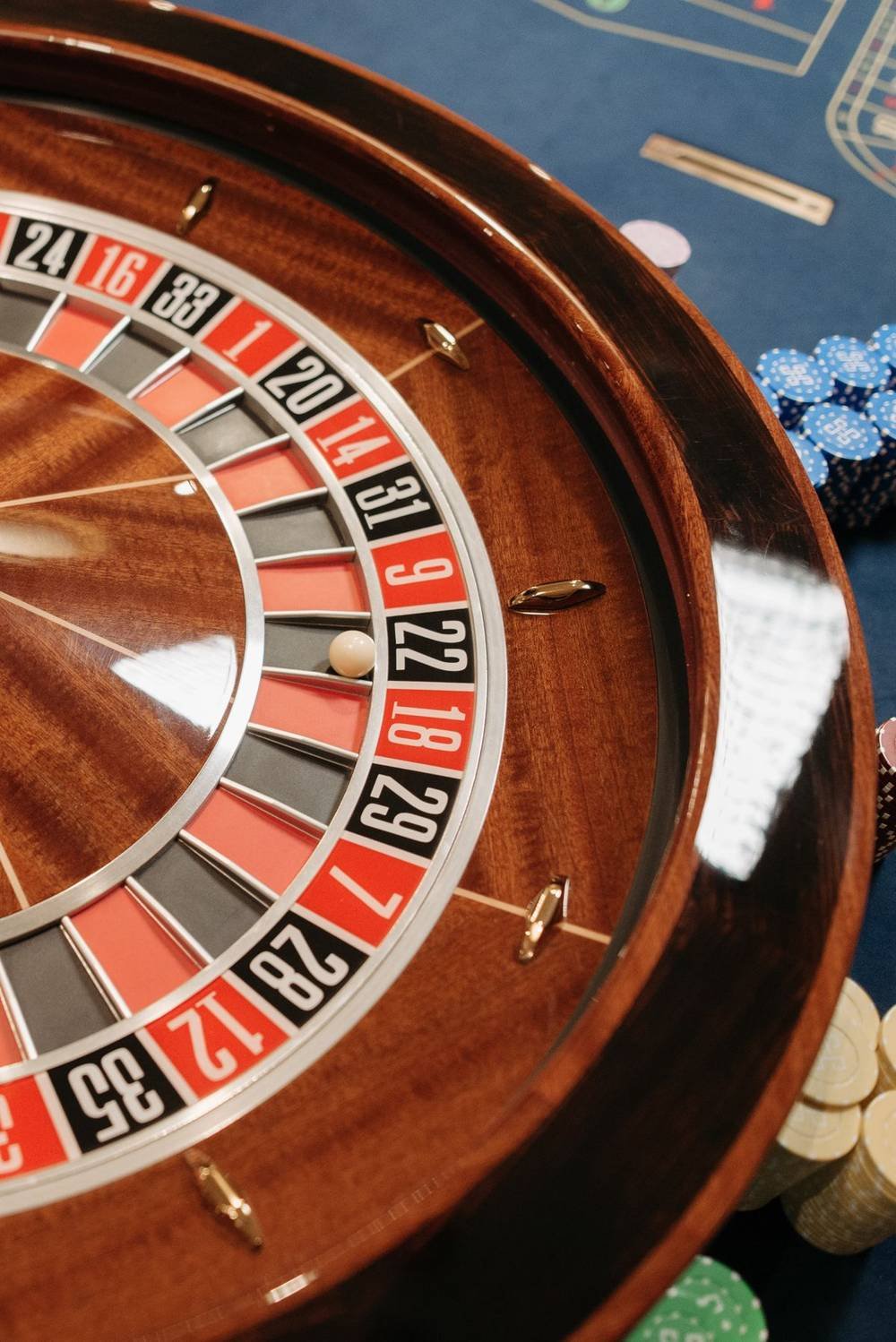
If you have ever typed how to win at roulette into a search bar late at night, you are not alone. I did exactly that years ago, convinced there had to be a clever trick I was missing, some pattern the regulars at the table already knew and I did not.
Here is the honest answer I wish someone had given me back then. No betting pattern can change the maths of the wheel. The house edge is built into the game itself, and no sequence of stakes, no lucky number, and no whispered system can erase it.
That does not mean you are helpless, though. You can choose better wheels, place smarter bets, protect your bankroll, and walk away at the right time. That is what an honest guide to how to win at roulette is really about: playing roulette well, enjoying it properly, and giving yourself the best possible shot on any given night.
Table of Contents
How to Win at Roulette Without Falling for the Usual Traps
Most guides on this subject start with a promise. They tell you a certain system is proven or that a secret pattern beats the casino. If a system genuinely worked, casinos would not leave roulette tables on the floor. They would have changed the game or removed it years ago.
The first trap is believing that past spins affect future ones. A wheel has no memory. If red has come up five times in a row, black is not due. The odds on the next spin are exactly what they were before, and treating a streak as a signal is one of the fastest ways to lose money.
The second trap is chasing losses. It feels logical in the moment: you have lost a few spins, so you raise your stake to win it all back. In practice, this is how a small losing session turns into a painful one. A clear plan, set before you sit down, matters far more than any clever staking pattern.
The third trap is paying for a winning system. Books, videos, and courses that promise guaranteed roulette profits are selling hope, not maths. The honest version of this advice is free, and you are reading it: pick the right wheel, bet sensibly, manage your money, and accept the limits of the game.
The Wheel Decides More Than Your System Does
Before you place a single chip, look at the wheel. A European wheel has one zero, while an American wheel has a zero and a double zero. That one extra pocket nearly doubles the house edge, and it is the single biggest factor in your chances on any given night. Anyone studying how to win at roulette should start here, because no staking pattern can undo a worse wheel.
The standard published figures tell the story plainly. The house edge on a European wheel is around 2.7%, while on an American wheel it is around 5.26%. Those are long-term averages, not promises about your next ten spins, but over time the difference is enormous.
If you want a fuller breakdown of the two wheels, this European versus American roulette comparison walks through the layouts side by side. The short version, though, is simple: if a European or French wheel is available, play that one. It is the easiest improvement you will ever make to your game.
French roulette deserves a mention too. On even-money bets, rules like la partage can return half your stake when the ball lands on zero. Not every table offers it, so it is worth asking, but when it is available it makes an already good wheel even friendlier.
The Bets That Actually Give You a Fighting Chance
Roulette offers a wide menu of bets, and it is easy to get distracted by the flashy ones. A single number pays 35 to 1, which sounds thrilling, but it only lands roughly once in every 37 spins on a European wheel. That kind of bet is entertainment, not a strategy.
For most players, the even-money bets are the sensible core of a session: red or black, odd or even, high or low. They pay 1 to 1 and win just under half the time on a European wheel. They will not make you rich, but they keep you in the game longer, and longer sessions with a fixed budget are usually more enjoyable sessions. That patience is an underrated part of how to win at roulette: staying in the game beats betting big and going home early.
Column and dozen bets sit in the middle ground. They pay 2 to 1 and cover twelve numbers each, so they hit more often than a single number while still offering a decent payout. I like mixing a couple of even-money bets with one column bet when I want a little variety without turning the session into a lottery ticket.
What I avoid, personally, is covering most of the table with scattered chips. It looks busy and feels strategic, but you are usually just guaranteeing a slow leak: small wins that never quite cover the losing chips around them. A few deliberate bets beat a table full of hopeful ones.
The Martingale: Why Doubling Down Breaks Most Players
The Martingale is the most famous roulette system in the world, and it sounds bulletproof at first. You bet on an even-money outcome, and every time you lose, you double your stake. When you finally win, you recover all your losses plus a small profit equal to your original bet.
The problem is the word finally. Losing streaks happen far more often than people expect. Lose six spins in a row and your seventh bet is 64 times your starting stake. Lose eight in a row and you need 256 times your original bet just to win back a single unit of profit. It is a brutal illustration of why chasing a shortcut rarely counts as knowing how to win at roulette.
Then there are table limits, which exist partly for this exact reason. Most tables cap how much you can stake on an even-money bet. Once you hit that cap, the system collapses: you can no longer double, and you are left holding a large loss with no way to recover it inside the system.
I have watched sensible people get hurt by the Martingale, not because they were reckless, but because the maths quietly outran them. It is a system that wins small amounts often and loses large amounts rarely, and that rare loss is more than enough to wipe out a long run of small wins.
Fibonacci and D’Alembert: Slower, But Still Not Magic
The Fibonacci system borrows its sequence from mathematics: 1, 1, 2, 3, 5, 8, and so on. After a loss you move one step forward in the sequence, and after a win you move two steps back. It grows more slowly than the Martingale, which makes it feel safer, and in a sense it is: your stakes climb less steeply.
But slower is not the same as safe. A middling losing run still pushes your stakes up, and you need several wins to climb back down the sequence. The house edge has not gone anywhere. You are simply losing money at a gentler pace, which can be pleasant right up until it is not.
The D’Alembert system is gentler still. You raise your stake by one unit after a loss and lower it by one unit after a win. It is easy to follow and hard to blow up quickly, which is probably why it has survived so long. Its weakness is the same as every other system’s, though: it assumes wins and losses will balance out neatly, and roulette does not owe you balance.
If you enjoy structure, there is nothing wrong with using one of these systems as a staking framework, as long as you are honest with yourself about what it is. If your idea of how to win at roulette includes enjoying the session rather than forcing a profit, a gentle framework is fine. It is a way of organising your bets, not a way of beating the wheel. Set a hard loss limit before you start, and treat hitting it as the end of the session, not a suggestion.
The James Bond Strategy and Other Famous Patterns
The James Bond strategy sounds like something from a film, and that is fitting, because it belongs more to fiction than to finance. It involves splitting a fixed stake across high numbers, a six-line bet, and zero, covering a large part of the wheel in one spin.
Covering more numbers does mean you win more often, but it also means you lose more when the ball lands in the uncovered section. The payout structure is designed so that, over time, the house edge applies just as it always does. You have simply repackaged the same odds in a more glamorous shape.
Other famous patterns work the same way. Covering a wheel section because a dealer always throws that way, betting a birthday pattern, or following a complex wheel map all share one flaw: they assume the wheel has a bias or a memory that can be exploited. Modern wheels are engineered and maintained precisely to prevent that.
That is not to say these patterns are useless. If a structured pattern makes the game more fun for you, and you are playing with money you can afford to lose, enjoy it. Just do not confuse fun with an edge. The moment a pattern starts deciding how much you can afford to lose, it has stopped being entertainment.
A Bankroll Plan That Keeps You in the Game
If there is one skill that genuinely separates happy roulette players from miserable ones, it is bankroll management. Decide before you play how much you are willing to spend in total, and treat that figure as the price of the evening’s entertainment, not as an investment you expect to recover.
I like to split my session bankroll into smaller units. If I have a modest budget for the night, I divide it into, say, forty units, and I stake one or two units at a time. This gives me enough spins to actually enjoy the game, and it stops a bad first ten minutes from ending the whole evening.
Set two numbers before you sit down: a loss limit and a win goal. Discipline like this is the unglamorous core of how to win at roulette over a whole evening, rather than on a single lucky spin. The loss limit is the point at which you stop, no matter what. The win goal is the point at which you pocket your profit and either stop or play on with a smaller, separate stake. Both numbers protect you from the two emotions that ruin sessions: desperation and greed.
Never borrow money to play, and never dip into money set aside for bills, rent, or essentials. If you find yourself breaking that rule, that is not a strategy problem. It is a sign to step away from the game entirely and get support, and there are free, confidential services that can help.
The Myths That Cost People Real Money
Hot numbers are one of the most persistent roulette myths. Casinos display recent results on screens beside the table, and it is tempting to read meaning into them. In reality, those boards are entertainment, not information. A number that has appeared three times recently is no more or less likely to appear next than any other number. Believing otherwise is the opposite of understanding how to win at roulette; it replaces maths with a story.
Dealer signature is another popular story. The idea is that a particular dealer throws the ball with such consistency that you can predict where it will land. In practice, the ball bounces, the wheel moves, and tiny variations swamp any pattern. Casinos also rotate dealers regularly, which makes the whole theory impractical even before the physics gets in the way.
Biased wheels are a real historical phenomenon, but they belong to history. Decades ago, a worn or imperfect wheel could favour certain pockets, and a few sharp players exploited that. Modern wheels are inspected, balanced, and replaced on a schedule that makes this kind of edge vanishingly rare for an ordinary player to find, let alone prove.
The most expensive myth of all is the belief that you are due a win. After a losing run, the mind desperately wants a story in which the universe balances the books. The wheel does not keep books. Every spin is independent, and the only thing a losing run guarantees is that you have already lost that money.
Online Roulette vs Live Roulette: What Changes
Online roulette and live casino roulette share the same rules, but the experience is different in ways that matter. Online games move much faster, which means you can place far more bets in an hour. That speed is convenient, but it also means a bankroll can disappear faster if you are not paying attention.
Random number generator games online are audited and tested, and licensed operators are required to meet strict fairness standards. Live dealer games, streamed from a studio, add a human element and a slower pace that many players prefer. Neither version is easier to beat: the wheel, virtual or physical, carries the same house edge.
One genuine advantage of playing online is choice. That freedom to choose is a small but real part of how to win at roulette on your own terms. You can usually find a European wheel in seconds, compare table minimums, and play at stakes that suit your budget. In a land-based casino, the only open table might be an American wheel with a higher minimum, and that is a worse deal dressed up as the only option.
Whichever version you choose, check that the operator is properly licensed before you deposit anything. The UK Gambling Commission website publishes guidance on licensed operators and safer gambling, and it is a good first stop if you are unsure about a site. A licence does not improve your odds, but it does mean the games are regulated and your money is handled properly.
What Winning at Roulette Realistically Looks Like
Let us be honest about the word itself. For almost every player, winning at roulette means having a good night, not building an income. It means walking away with more than you sat down with, enjoying the game, and not regretting the session the next morning.
Short-term wins happen all the time. Variance is real, and on any given night the ball can favour you. A player who bets modestly, picks a European wheel, and stops at a sensible win goal will have winning nights, sometimes several in a row. The mistake is treating a lucky streak as proof of skill and raising the stakes to match the new story.
Long-term profit, on the other hand, is a different claim entirely. The house edge guarantees that, across thousands of spins, the casino keeps its percentage. Professional roulette players in the modern sense essentially do not exist, and anyone selling you that lifestyle is selling you something else.
So here is my realistic definition of success: you played a game you enjoy, on the best wheel available, with money you could afford to spend, and you stopped when you planned to stop. Some nights that ends with a profit. Every night it ends with your dignity and your budget intact. That is a better result than most systems deliver.
Conclusion
Roulette is a wonderful game when it is treated as entertainment and a miserable one when it is treated as a money-making plan. The wheel does not care about your system, your lucky numbers, or how much you have already lost. What it rewards, if anything, is the player who chooses the better wheel, bets calmly, and knows when to walk away. That, more than any system, is how to win at roulette in the only sense that lasts.
Keep your stakes modest, your sessions short, and your expectations honest. Enjoy the wins when they come, accept the losses without chasing them, and remember that the best roulette strategy ever devised is simply this: play smart, play for fun, and stop on time.
Frequently Asked Questions
Can anyone really learn how to win at roulette every time?
No. No system or strategy can guarantee a win on every spin, because the house edge is built into the wheel itself. The best any player can do is choose a European wheel, bet sensibly, and manage their bankroll well.
Which roulette version gives players the best chance?
European roulette, with its single zero and a house edge of around 2.7%, gives players a better chance than American roulette, which adds a double zero and raises the edge to around 5.26%. French roulette can be better still when la partage applies to even-money bets.
Does the Martingale system work?
It works until it does not. Doubling after every loss recovers small losses often, but a modest losing streak quickly demands very large stakes, and table limits can stop you doubling altogether. That combination is why it fails most players eventually.
Are hot and cold numbers real?
No, not in any way that helps you predict the next spin. Each spin is independent, and recent results do not change the odds. Screens showing recent numbers are entertainment, and treating them as signals usually leads to larger, less disciplined bets.
Is online roulette rigged?
Licensed online roulette games use tested random number generators or real physical wheels in live studios, and regulated operators are audited for fairness. Always check an operator’s licence before depositing, and avoid unlicensed sites entirely.
How much money should I bring to a roulette session?
Bring only money you can comfortably afford to lose, and decide that figure before you play. Splitting it into small units and setting a firm loss limit before your first spin will make the session last longer and end far more happily.
Gamble responsibly. 18+ only.

1 comment