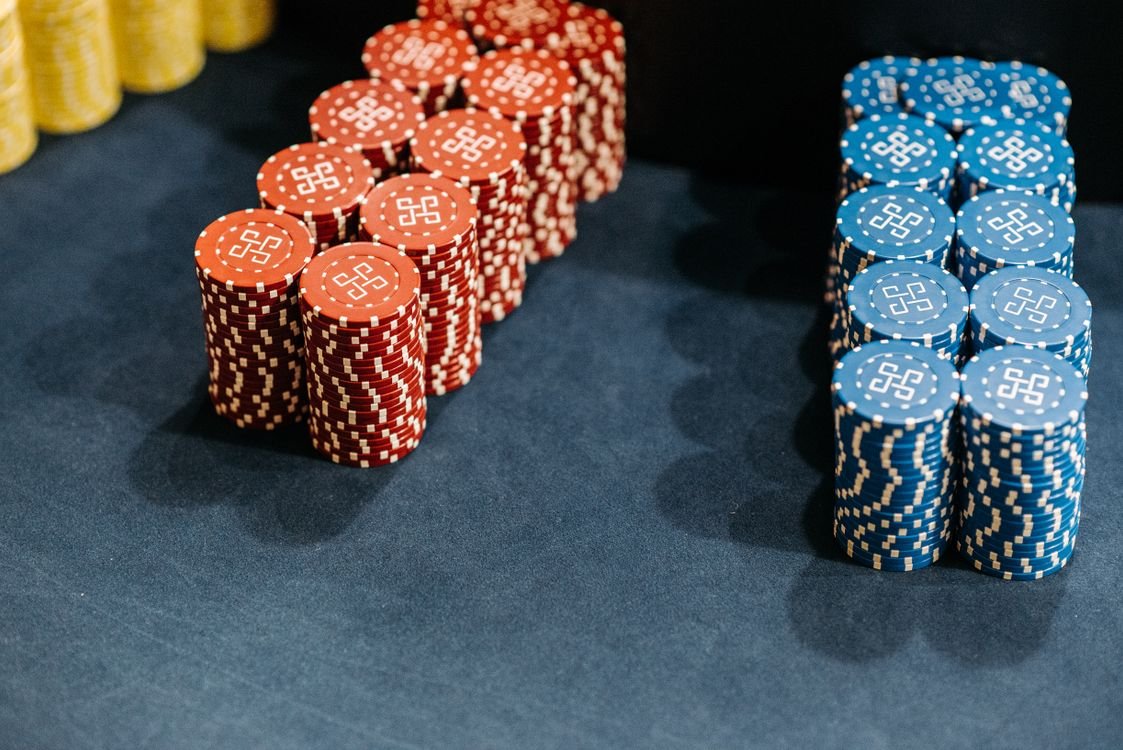
I will be honest with you: the first time I walked out of a casino with a chip still in my pocket, I did not even realise I had done it. I had been playing a low-stakes blackjack table for a couple of hours, chatting with the dealer, slowly losing a very modest amount of money, and when I stood up to leave I just slipped my last few chips into my jacket without thinking. It was only on the train home, when I reached in for my ticket, that I felt that familiar round disc and wondered, can you take casino chips home without getting into trouble? That little moment of panic stayed with me, and it is the reason I ended up looking into this properly instead of just guessing.
Here is the thing most casual players never get told at the table: a casino chip is not quite the same as cash, even though it feels like it when you are stacking them up. You hand over real money, you get chips back, and you can hand those chips back again for real money at the cashier. In between, though, those chips belong to a strange in-between world. They are tokens issued by one specific casino, for use inside that casino, under that casino’s rules. That distinction matters a lot more than most of us realise when we are thinking about keeping one as a souvenir.
Over the years I have spoken to dealers, watched how security staff behave near the exits, and read more house-rule pages than I ever expected to. I have also learned, sometimes the hard way, that the answer is not a simple yes or no. It depends on the value of the chip, the casino you are in, whether you intend to keep it or spend it, and whether you try to do anything clever with it afterwards. That is why I keep coming back to one question: can you take casino chips home, and if so, under what conditions? A one-dollar chip kept as a holiday memento is a very different story from a high-value chip slipped into a pocket on purpose. So let me walk you through what I have learned, in plain language, so you can decide for yourself — and stay on the right side of the rules.
One more promise before we start: I am not going to encourage you to bend the rules or test security. Casinos are private businesses with their own security teams, and they take their property seriously. My goal here is to help you understand where the line is, so you can enjoy the souvenir side of casino visits — if that is your thing — without an awkward conversation with a security guard, or worse.
Table of Contents
Can You Take Casino Chips Home? The Short Answer
The short answer is: sometimes, and usually only the cheap ones. In many casinos, particularly in places like Las Vegas, taking a low-denomination chip home as a souvenir is quietly tolerated. Staff know that tourists love keeping a chip from a famous casino, and chasing every single visitor over a one-dollar or five-dollar chip would be bad for business and frankly a waste of security’s time. That does not mean it is officially allowed everywhere, though. So if you are wondering, can you take casino chips home from a famous resort, the honest answer is that staff will probably look the other way for a cheap chip. It means it is often overlooked, which is not quite the same thing.
Where it gets serious is value. The moment a chip is worth a meaningful amount of money — think hundreds or thousands — the casino absolutely cares. Those chips are tracked, counted, and reconciled, and a missing high-value chip triggers questions. If you walk out with one by accident, you should expect to be stopped, questioned, or at the very least asked to hand it back. If you walk out with one on purpose, you could be accused of theft, because in the casino’s eyes you have taken their property.
So the practical rule I live by now is simple: never assume, never hide, and never take anything you would be upset about losing or explaining. If you want a souvenir, ask. If you are not sure, cash out properly at the cage. And if a chip ends up in your pocket by accident, deal with it straight away rather than hoping nobody noticed. The rest of this guide explains why that approach keeps you safe.
Why Casinos Treat Chips as Their Property, Not Your Money
It helps to understand how casinos themselves see chips. When you buy chips, you are not really buying little discs of money. You are exchanging cash for tokens that the casino issues, and those tokens are only redeemable at that casino’s cashier, during its opening hours, under its conditions. The casino remains the owner of the physical chips themselves. You own the value they represent while you hold them legitimately, but the discs, the designs, and the security features all belong to the house.
This is why casinos can be so particular about chips leaving the building. From their point of view, a chip that leaves is a piece of their equipment that has gone walkabout, and it is also a potential security risk. A chip in circulation outside the casino could be copied, altered, or used in a scam. It could also be brought back later by someone else and presented for cash, which creates a headache for the cashier who has to work out whether it is genuine and whether it should be honoured.
Think of it a bit like the tokens at an old-fashioned arcade, or the chips at a poker night that belong to the host’s set. You would not take the host’s poker chips home and then try to sell them back to him next week, would you? The casino version is the same idea, just with far more money at stake and far better security. Once you see chips as borrowed tokens rather than pocket money, a lot of the rules start to make sense.
Low-Value Chips: The Souvenirs Casinos Usually Ignore
Let us start with the good news. Low-denomination chips — typically one, five, or sometimes twenty-five dollar or pound chips — are the ones most commonly kept as souvenirs, and they are the ones casinos are least likely to make a fuss about. In tourist-heavy casinos, staff see this every single day. A visitor plays a few hands of roulette, keeps one chip from a famous casino as a memento, and goes home happy. From the casino’s perspective, the cost of that chip is tiny, and the goodwill of a happy visitor who might return is worth far more. This is the scenario most people picture when they ask, can you take casino chips home as a keepsake?
That said, “usually ignored” is not the same as “officially permitted.” I have visited casinos where a dealer has smiled and said, “Keep one if you like,” and others where the house rules clearly state that all chips remain casino property and must be redeemed before leaving. The difference often comes down to location, culture, and how the casino markets itself. Big resort casinos in tourist destinations tend to be relaxed about it. Smaller, stricter, or members-only establishments may not be.
My personal approach, and the one I would recommend, is to simply ask the dealer or a floor supervisor. A quick, friendly question — “Is it okay if I keep one of these low chips as a souvenir?” — costs you nothing and removes all doubt. If they say yes, you have a guilt-free keepsake and a nice story. If they say no, you cash it in and walk away with your money instead, which is hardly a bad outcome. Asking also shows respect for the house, and dealers tend to appreciate players who respect the rules.
High-Value Chips: Why Security Suddenly Cares
Now flip the situation. Imagine a chip worth five hundred, a thousand, or five thousand. These are not souvenirs; they are serious money, and casinos treat them accordingly. High-value chips are counted meticulously, often stored in locked trays, and handed out only under supervision. Dealers and pit bosses keep a close eye on them, and surveillance cameras track their movement around the table. A high-value chip going missing is not a rounding error — it is an incident.
If you leave with a high-value chip, even by genuine accident, you should expect the casino to notice. In short, if you ask, can you take casino chips home when the chip is worth hundreds, the casino’s answer will be very different. Table inventories are checked regularly, and discrepancies get investigated. You might be approached at the exit, or contacted later if you are a known player or a loyalty-card member. At best, you will be asked to return the chip or redeem it properly. At worst, if there is any suggestion that you took it deliberately, you could face a theft allegation, a ban from the casino, or involvement from the police.
This is also why I never carry high-value chips around the casino floor casually. If I am playing at higher stakes, I keep my chips visible on the table or in the tray, and I cash out at the cage before I leave the gaming area. It sounds overly careful, but it removes any chance of an innocent mistake turning into an uncomfortable situation. When the stakes are high, the boring, careful approach is the right one.
RFID, Serial Numbers, and How Casinos Track Chips
Modern casino security is far more sophisticated than most visitors realise. Many higher-value chips now contain RFID tags — tiny radio-frequency identification chips embedded inside the disc. These allow the casino to track chips as they move around the gaming floor, verify them at tables and cages, and spot counterfeits. Some casinos also use ultraviolet markings, unique edge patterns, and serial numbers on their higher denominations.
What does this mean for you as a player? First, it means that trying to fake or alter a chip is a very bad idea, because the casino has multiple ways to check authenticity. Second, it means that a high-value chip you take home is not just a disc — it is a tagged item that the casino can identify as theirs. That raises an obvious question: can you take casino chips home undetected when RFID is involved? With high-value chips, probably not for long. Even if you never try to spend it, the casino’s inventory system knows it is missing. And third, it means that if you ever do try to redeem a chip somewhere it does not belong, the systems in place are designed to catch it.
Lower-value chips usually do not carry this level of technology, which is one more reason casinos are relaxed about them. A plain one-dollar chip costs very little to replace, and there is no sophisticated tracking to worry about. But do not assume that means all cheap chips are untracked or unimportant. Some casinos use consistent designs and colours across denominations, and if you want to understand what you are actually holding, it is worth learning about casino chip colors and values before you decide which chips are worth keeping and which are simply best cashed in.
House Rules: What the Fine Print Actually Says
Every casino has house rules, and they are usually available at the entrance, at the cashier, or on the casino’s website. In my experience, most players never read them — I certainly did not, for years. But when it comes to chips, the fine print is where the real answer lives. Common wording includes phrases like “chips remain the property of the casino,” “chips must be redeemed at the casino cage,” and “chips have no cash value outside this establishment.” Reading those lines is the fastest way to answer the question, can you take casino chips home from this particular casino? Those three lines tell you almost everything you need to know.
The rules also vary by jurisdiction, which is another reason there is no single universal answer. In Nevada, for example, the culture around souvenir chips is well established, and many casinos tolerate it. In the United Kingdom, where gambling is regulated by the UK Gambling Commission, licensed casinos operate under strict conditions, and their house rules tend to be enforced more formally. In other countries, taking chips out of a casino could be treated more seriously still. If you are visiting a casino abroad, it is worth checking the local rules rather than assuming the relaxed attitude you saw in Las Vegas applies everywhere.
My advice is simple: spend two minutes reading the house rules, or ask a member of staff to point you to the relevant section. It is not the most exciting part of a casino visit, but it is the part that protects you. And if the rules say chips must be redeemed before leaving, then that is the rule, whether or not other players seem to be ignoring it. Other people’s behaviour is not a defence if you get stopped.
What Happens at the Exit If You Walk Out With Chips
So what actually happens if you walk towards the exit with chips in your pocket? In most cases, for low-value chips, absolutely nothing. So can you take casino chips home past the exit without a search? For a low-value chip, usually yes, because nobody is checking. Casinos do not generally search every visitor on the way out, and security staff are not standing at the door patting people down over a five-dollar chip. The exit is usually relaxed, especially in large resort casinos where thousands of people flow in and out every day.
Things change if you have been playing at high stakes, if a table inventory shows a discrepancy, or if surveillance has flagged something unusual. In those cases, security may approach you politely but firmly and ask about the chips. This is not a moment to argue, run, or try to hide anything. The best response is to be calm, honest, and cooperative. Explain that it was accidental if it was, offer to return or redeem the chips immediately, and let them sort it out. In my experience, staff respond far better to honesty than to defensiveness.
It is also worth remembering that casinos share information. If you are banned from one casino for a chip-related incident, other casinos in the same group — and sometimes in the same city — may hear about it. A moment of carelessness or cheekiness is not worth a reputation that follows you around. Cashing out properly takes five minutes. A ban lasts a lot longer.
Can You Use Your Chips at Another Casino?
This is one of the most common follow-up questions I hear, and the answer is a firm no. Chips are only valid at the casino that issued them. You cannot take a chip from one casino and use it to play at another, even if the two casinos are owned by the same company, are on the same street, or look almost identical. Each casino issues its own chips, with its own designs, colours, security features, and inventory systems, and other casinos will not accept them. People often ask, can you take casino chips home and then spend them somewhere else? The answer to the second half is no.
If you try, you will almost certainly be refused at the table, and the dealer may confiscate the chip and call a supervisor. In some cases, presenting another casino’s chips could be treated as an attempt to pass off invalid tokens, which is a much more serious matter than simply keeping a souvenir. It is not worth the embarrassment, and it is definitely not worth the risk.
The same applies to trying to sell chips online or to other players. A chip from a casino you visited on holiday has no spending power anywhere else, and anyone buying it is buying a collectible, not money. If you ever see someone advertising casino chips as though they can be spent anywhere, treat that as a red flag. Legitimate collectors buy chips for their history and design, not because they think they can cash them in somewhere new.
Expired Chips and Chips From Closed Casinos
Another situation that confuses people is what happens when a casino closes down or retires a chip design. Casinos periodically change their chip designs for security reasons, and when they do, they usually announce a redemption period — a window of time during which old chips can still be cashed in at the cage. After that window closes, the old chips become worthless as money, even if they are still perfectly genuine.
This is actually where collecting gets interesting. Once a chip can no longer be redeemed, its only value is as a collectible. Collectors often ask, can you take casino chips home from a closed casino and still expect a payout? Once redemption has ended, no. Chips from closed casinos, especially famous or historic ones, can become genuinely sought after by collectors. A chip from a casino that no longer exists tells a story, and collectors will pay for that story, not for the face value printed on the chip. But — and this is important — you should never buy an “expired” chip believing you can still cash it in. Once the redemption window has passed, the cashier will not honour it, however genuine it looks.
If you find an old chip at home from a trip years ago, it is worth a quick check to see whether the casino is still open and whether that design is still in circulation. If it is, you may still be able to redeem it on a return visit — though some casinos set time limits, so do not assume. If the casino has closed, keep it as a memento or look into the collector market, but do not expect a payout. Knowing which category your chip falls into saves a lot of disappointment.
Collecting Casino Chips Without Getting Into Trouble
If you enjoy the idea of collecting, there is a perfectly legitimate way to do it, and I think it is a genuinely fun hobby. The key is to collect openly and honestly. The safest way to build a collection starts with a simple question: can you take casino chips home with the casino’s blessing, or should you buy from a collector instead? Buy chips from reputable collectors, trade with other collectors, attend collector events, or keep low-value chips that a casino has explicitly allowed you to keep. Many collectors focus on a theme — a particular city, a particular casino group, or a particular era — and build their collection slowly over years.
What you should not do is build a collection by quietly pocketing chips from tables, especially higher-value ones. That is not collecting; that is taking property that is not yours, and it will eventually catch up with you. Collectors themselves tend to look down on that behaviour, because it undermines the hobby and gives genuine collectors a bad name. The collector community values provenance — knowing where a chip came from and that it was obtained legitimately — far more than a chip obtained by stealth.
Storage matters too, if you do start collecting. Keep chips in a cool, dry place, away from direct sunlight, ideally in protective cases or albums designed for casino chips. Chips can fade, chip (no pun intended), or get damaged if they are rattling around loose in a drawer. A well-kept collection is also easier to show off, easier to insure if it becomes valuable, and much more satisfying to look at than a jumble of discs in a jar — although I will admit my own first “collection” started exactly that way.
Conclusion: My Honest Take on Keeping Casino Chips
So, after all of that, where do I land? When friends ask me, can you take casino chips home, I no longer give a one-word answer. I think keeping a low-value chip as a souvenir is one of life’s small pleasures, and in many casinos it is quietly accepted for exactly that reason. I have a few on a shelf at home myself, each one tied to a trip, a friend, or a memorable night out, and I enjoy looking at them. But I only kept chips where I was confident it was okay — either because I asked, or because the casino’s attitude towards souvenir chips was well known and the value was trivial.
What I would never do is take a high-value chip home, try to use a chip somewhere it does not belong, or treat casino property as something I am entitled to keep. The line between a harmless souvenir and a security incident is the value of the chip and the intent behind taking it, and crossing that line is never worth it. Casinos are fun places, but they are also serious businesses with serious security, and respecting that is part of being a good guest.
If you remember just one thing from this guide, let it be this: ask first, cash out properly, and keep only what you are sure you are allowed to keep. That simple habit lets you enjoy the souvenir side of casino visits without any of the worry I felt on that train home all those years ago. And honestly, a chip you kept with permission makes a much better story than one you had to explain to security.
Frequently Asked Questions
Gamble responsibly. 18+ only.


Post Comment