
My first time at a real craps table, I did something embarrassing. The dealer slid me a stack of green chips as change for a hundred, and I tipped him one — thinking I’d just handed over a dollar. The table laughed, the dealer thanked me a little too warmly, and a kind stranger leaned over and whispered, “Green is twenty-five, buddy.” That was a $25 tip on a $15 bet.
Nobody teaches you casino chip colors and values before your first visit. You just absorb them through expensive mistakes, like I did. This guide exists so you don’t have to learn the way I did. Here’s the standard color chart, why it works the way it does, where it breaks down, and the practical stuff — cashing out, tournament chips, home games — that nobody puts on the little placard at the table.
Table of Contents
Casino Chip Colors and Values Explained: The Standard Chart
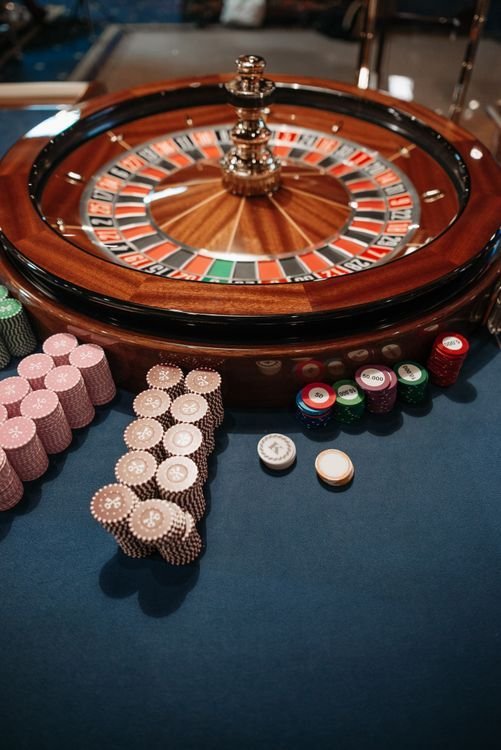
Let’s start with the part you’ll use 95% of the time. Across most casinos — especially in the US — chip colors follow a widely recognized convention. Memorize white-red-green-black and you’ve covered nearly every bet you’ll ever make as a casual player. The jump from each tier is roughly 4–5x, which is deliberate: it keeps the number of chips on the table manageable. Imagine betting $500 with nothing but $1 chips — you’d need a wheelbarrow.
| Chip color | Value | Nickname |
|---|---|---|
| White (sometimes blue) | $1 | “dollars” or “singles” |
| Red | $5 | “nickels” |
| Green | $25 | “quarters” |
| Black | $100 | “blacks” |
| Purple | $500 | “Barneys” |
| Orange or yellow | $1,000 | “pumpkins” |
Above $1,000, standardization falls apart. You’ll see gray or light-blue $5,000 chips in high-limit rooms, brown or cranberry $10,000 chips, and rectangular plaques (not round chips at all) for $25,000 and up, mostly in baccarat salons. Unless you’re playing at those stakes, you’ll rarely touch them — but it’s fun to know they exist.
One more critical note before we go further: this chart is convention, not law. No regulation forces a red chip to equal $5. Individual casinos set their own values, and they do deviate. I’ll come back to this, because it’s the single most expensive assumption beginners make.
Why Chips Are Color-Coded This Way
The system exists for speed and security. Dealers need to glance at a sprawling craps layout and instantly total dozens of bets; players need to read opponents’ stacks across a poker table; surveillance needs to verify payouts on camera. Color coding makes all of that possible at a glance.
The specific colors aren’t random either. They were chosen for maximum visual contrast under casino lighting — you can tell red from green from black instantly, even at a distance, even after four hours at the table. The 4–5x progression between tiers means each color is visually and numerically distinct from its neighbors, which reduces misreads. And the nicknames (“nickels,” “quarters,” “pumpkins”) are verbal shorthand that keeps table talk fast: “quarters on the hard eight” is clearer than “twenty-five-dollar chips on the hard eight.”
There’s also a security dimension. Modern casino chips are surprisingly sophisticated objects — clay composite construction with metal inserts for weight, intricate edge-spot patterns, and increasingly RFID tags embedded inside. The color is just the outermost layer of a system designed to make chips hard to counterfeit and easy to track. When a casino issues a new chip series, the colors stay familiar but the security features change.
Where the Standard Breaks Down: Regional Variations
Here’s where my craps-table education continued. The “standard” chart is really the American standard, and even within the US it wobbles. Atlantic City is famously consistent: white $1, pink $2.50 (yes, a pink chip exists there), red $5, green $25 — mandated by New Jersey regulation, which is the exception that proves the rule. Nevada has no color law at all. Historically you could find $1 chips in white, yellow, gray, blue, brown, even black. Modern corporate ownership has standardized things considerably, but don’t assume. Outside the US, all bets are off. Some European casinos use different progressions entirely; a green chip might be €20 or €10 depending on the house.
The practical rule is boring but saves money: when you sit down somewhere new, check the denominations before you bet. Every table has a placard or the dealer will tell you in two seconds. The thirty seconds this takes is the cheapest insurance in the casino. I now do it reflexively, the way I check my mirrors when I get in a rental car.
And never, ever carry chips from one casino to another assuming they’ll hold the same value. Technically most casinos won’t even accept a competitor’s chips at the tables — and if the colors mean different things there, you’ve got a real problem at the cage.
Cash Game Chips vs. Tournament Chips: Not the Same Thing
This confuses newcomers constantly, so let’s be explicit. Cash game chips represent real money. A $25 green chip is $25 — you can walk it to the cashier’s cage and exchange it for a twenty and a five any time you like. Your stack’s value is your money.
Tournament chips represent tournament points, not money. They’ll often say “no cash value” right on them. In a poker tournament starting with T$25 green chips, those greens are worth 25 tournament units used to track your standing and the blind structure — you can’t cash them out, and their color-to-number mapping follows tournament convention (which roughly mirrors the cash chart: green 25, black 100, purple 500, yellow 1,000, orange 5,000) but the dollars aren’t real.
Why does this matter for you? Two reasons. First, don’t try to pocket tournament chips as souvenirs thinking they’re worth something — they’re not, and removing them can actually get you in trouble. Second, if you ever play a tournament, learn its specific chip structure during the announcement; late-stage tournaments introduce exotic colors (pink 100,000 chips at the WSOP, for instance) that you’ll never see in cash games.
Reading the Table: Stack Sizes and Bet Sizing
Once you know the colors, you can read a table like a book. A player with tall stacks of black chips is playing a different game than someone nursing a short stack of reds. Dealers use this constantly — they’ll size up your stack before suggesting bet amounts, and they’ll break your big chips into smaller ones to keep the game moving.
A few practical skills worth developing. Counting a stack at a glance: casino chips are a standard 39mm diameter, and stacks are usually built in twenties. Twenty $5 reds = $100. Learn to eyeball stacks in twenties and you’ll estimate any stack in seconds.
Coloring up: when you leave a table, the dealer will consolidate your small chips into larger denominations — your pile of reds becomes a few blacks. This is for your convenience (and the casino’s — fewer chips to handle). Always color up before walking away with a mountain of small chips. Protecting your chips: keep high-value chips visible at the front or top of your stack — it’s etiquette, and in poker it’s a rule. And never, ever hand your chips to another player or a stranger “to hold.” Chips are bearer instruments: whoever holds them owns them.
Cashing Out: The Cage and Its Quirks
When you’re done, you take your chips to the cashier’s cage — the barred window, usually near the entrance. A few things first-timers should know. Cages may ask for ID on larger cash-outs (thresholds vary, often around $3,000+, and $10,000+ triggers a currency transaction report in the US). This is normal and not an accusation.
Chips effectively expire: when casinos discontinue a chip design, old chips become worthless after a redemption window. That souvenir chip in your drawer from 2019 might be a coaster now. Cash out the same trip whenever possible. Don’t clean your chips. Seriously — people do this. Casinos consider altered chips suspicious, and you can have them confiscated. Leave them as they are. Foreign or old chips found in estate sales or drawers: the issuing casino may still honor them if the design is current, but call ahead. Many end up as collectibles instead.
The cage is also where you’d go if you ever wondered whether a chip you found is real — though the honest answer is that found chips are usually either worthless commemoratives or someone else’s loss. Turn them in; karma and security cameras both exist.
Home Game Chips: Setting Your Own Values
If you run a poker night, you’ll buy a generic chip set — and now you get to assign values, which is where understanding the standard chart pays off. My advice: copy the casino convention (white $1, red $5, green $25, black $100) even if your actual stakes are lower. Your players will already know it, which eliminates an entire category of confusion and misdealt pots.
For micro-stakes games, scale the numbers but keep the colors: white = $0.25, red = $1, blue = $5, green = $25 works beautifully for a $20 buy-in game. What matters is that the color hierarchy is consistent and everyone agrees before the first hand.
Two home-game pitfalls to avoid: don’t introduce more colors than you need (four is plenty for most games), and never mix two different chip sets with conflicting color schemes. Nothing kills a friendly game faster than an argument over whether the blue chip is $5 or $10.
What About Digital Chips? Online and Live Dealer
Online, “chips” are just graphics — you click a denomination and the software handles it. But the color convention carries over: every online casino I’ve played uses white/red/green/black for $1/$5/$25/$100, because players expect it. It’s a nice example of the physical tradition shaping the digital one.
Live-dealer games are the interesting middle ground. The dealer at the studio handles real physical chips on a real table, and you bet via the digital overlay. Watching a live dealer work a real table is actually a great way to learn chip handling etiquette before you ever visit a casino — you see coloring up, stack management, and payouts done properly, with zero risk of a $25 tipping mistake like mine.
One online-specific note: digital chips have no cash-out quirks. Your balance is your balance. But the same bankroll discipline applies — arguably more, since clicking a black chip graphic feels nothing like sliding a real $100 chip forward. Set deposit limits and respect them.
Quick-Reference: The Chart to Screenshot
For your first casino visit, save this: White/Blue = $1 — small bets, tips, change. Red = $5 (“nickels”) — the workhorse chip. Green = $25 (“quarters”) — where real betting starts. Black = $100 — serious action. Purple = $500 (“Barneys”) — high-limit territory. Orange/Yellow = $1,000 (“pumpkins”) — whale waters. Above that = ask the dealer; variations are common.
And the golden rule underneath it all: verify at the table before you bet. Colors are a language, and like any language, the dialect changes by region. Thirty seconds of checking beats a $25 tipping lesson — trust me on that one.
Conclusion
Casino chips look like toys, but they’re precision instruments: color-coded for speed, weighted for feel, and secured like currency — because they are currency on the casino floor. The standard white-red-green-black progression will carry you through 95% of casino situations, and knowing where it breaks down (regional variations, tournament vs. cash, high-denomination oddities) puts you ahead of most casual players.
My craps-table education cost me $25 and a blush. Yours just cost you ten minutes of reading. Next time a dealer slides you a stack of green, you’ll know exactly what you’re holding — and exactly how much to tip.
For a deeper look at what those chips are actually worth once you bet them, the Poker.org chip values guide breaks down the full denomination structure with tournament specifics.
Gamble responsibly. 18+ only.


1 comment