I still remember the first time I walked up to a blackjack table with a twenty-dollar bill in my pocket and a whole lot of confidence. I had watched a few videos, I knew the basic rules, and I figured I was ready. Then I looked at the little sign standing on the table, saw the numbers on it, and quietly walked away to find an ATM. Nobody had ever explained to me what are casino table limits, and that small gap in my knowledge nearly cost me an embarrassing moment in front of a full table of strangers.
Here is the good news: table limits are one of the simplest things in a casino to understand, once someone actually explains them to you in plain language. They are not a trick, they are not fine print designed to catch you out, and they are definitely not something you need a maths degree to figure out. They are simply the rules each table sets for how little and how much you can bet on a single hand, spin, or roll.
In this guide, I am going to walk you through everything I wish someone had told me before my first visit. We will cover what minimums and maximums actually mean, why casinos bother setting them at all, how they change from game to game, and how to pick a table that fits your budget so you can relax and actually enjoy yourself.
Table of Contents
What Are Casino Table Limits, Really?
At its simplest, a table limit is a pair of numbers: the smallest bet the table accepts and the largest bet it accepts. You will usually see them written together on a small sign, something like “$5 minimum, $500 maximum.” That means every bet you place at that table has to be at least five dollars and no more than five hundred dollars. Anything in between is fair game.
When I first asked what are casino table limits, I assumed they were some kind of entry fee or a cover charge for sitting down. They are not. You do not pay anything just to sit at a table, and the limit does not mean you have to bet the maximum or that you are locked into betting the same amount every time. It just sets the floor and the ceiling for each individual bet. You can bet $5 on one hand and $25 on the next, as long as both amounts sit inside the range.
It also helps to know that limits apply per bet, not per person or per visit. If you are playing roulette, for example, the minimum usually applies to each individual bet you place on the layout, not to the total of all your chips combined. That is a detail that trips up a lot of first-timers, and we will come back to it later because it matters more than you might think.
Why Casinos Set Limits in the First Place
The first thing to understand is that limits are not the casino trying to squeeze you. They are a practical way of organising a room full of very different players. Think about it from the casino’s side for a moment: on any given night, you might have a tourist who wants to play for an hour with fifty dollars sitting next to someone who thinks nothing of betting a thousand dollars a hand. Putting those two people at the same table would be miserable for both of them. Limits let the casino sort players into groups where everyone is roughly comfortable with the same stakes.
Limits also help the casino manage its own bankroll. Every table game carries some risk for the house, and the maximum bet caps how much the casino can lose on a single hand or spin. That is just sensible business, the same way a shop limits how many of one item you can buy during a sale. The minimum, meanwhile, keeps the game moving at a sensible pace. A table where someone bets a single dollar every hand would crawl along, and the dealer, the other players, and the casino would all lose patience.
Once you understand what are casino table limits, the layout of a casino floor starts to make a lot more sense. The limits are what define the different sections of the room, and they tell you, before you even sit down, what kind of game you are walking into.
How to Read the Limit Sign on a Table
Every table game has a small sign, usually standing upright near the dealer or printed on the felt itself. It will say something like “Minimum $10, Maximum $1,000” or sometimes just “$10–$1,000.” Some tables also show a separate limit for side bets, which are the little optional wagers next to the main game. Side bets often have their own, usually lower, maximums, so do not assume the big number on the sign covers everything.
If you are still wondering what are casino table limits in practice, here is my advice: find the sign before you sit down, every single time. It takes about three seconds, and it saves you the awkwardness of sitting down, placing your chips, and having the dealer politely tell you that your bet is too small. I have seen it happen, and it is never as embarrassing as people fear — dealers are used to it — but it is easily avoided.
One more thing worth knowing: the sign shows the limits for the main bet at that table right now. Limits can change during the day, so it is worth glancing at the sign again if you return to a table after a break.
How Limits Differ by Game: Blackjack, Roulette, Craps, and Baccarat
Not all games treat limits the same way, and this is where things get interesting. In blackjack, the limit is straightforward: your bet on a hand must fall between the minimum and the maximum. If the table says $10 minimum, you cannot bet $5 on a hand, and you cannot split or double down beyond the table maximum either. That last point surprises people, because doubling down means putting extra money on a hand you have already bet on, and the total still has to respect the ceiling.
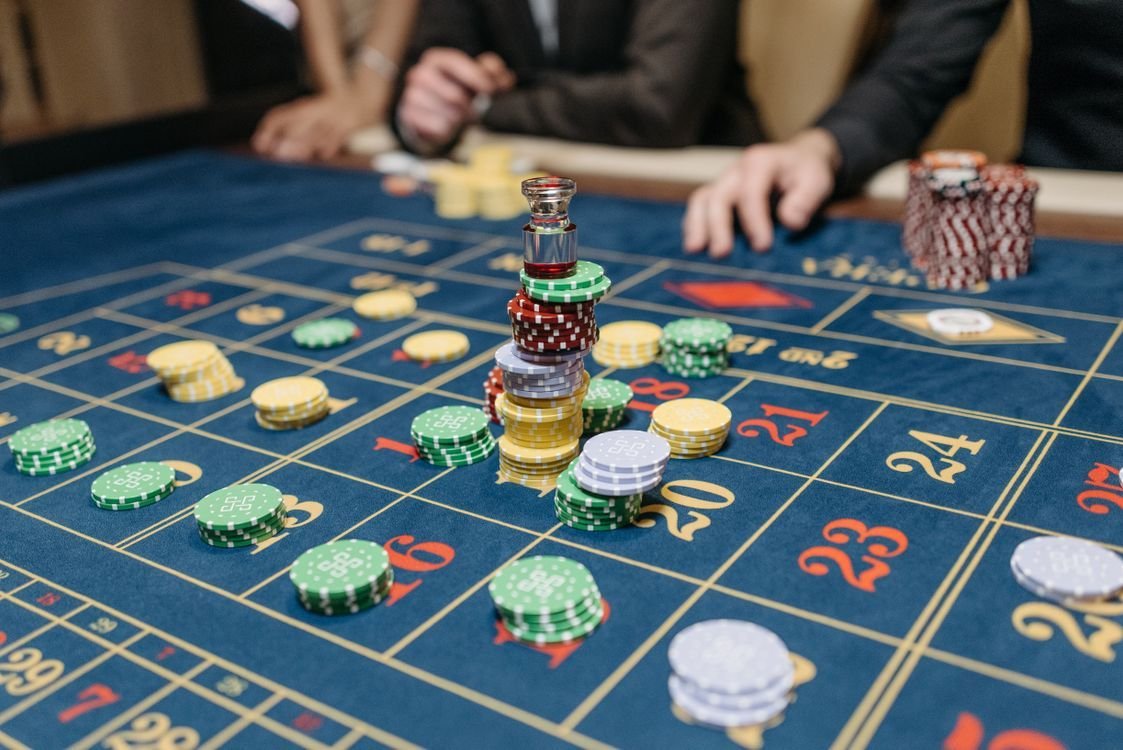
Roulette works a little differently, and it is the game where beginners most often get confused. On a roulette table, the minimum usually applies to each individual bet, and the maximum applies to each individual bet too. So on a $5 minimum table, a $5 chip on a single number is fine, and so is $5 on red. But you cannot put $1 on five different numbers and claim your total is $5, because each of those bets is only $1. On the flip side, the maximum is per spot on the layout, which is why you will sometimes see a separate maximum for straight-up number bets and a higher one for even-money bets like red or black.
Craps has its own quirks. The minimum applies to the main pass line bet, and other bets on the table, like the odds bet you can place behind your pass line bet, often have their own separate limits, sometimes expressed as a multiple of your original bet, like “3x odds” or “5x odds.” It is another reminder that what are casino table limits really comes down to the specific game in front of you, not one universal rule. If craps looks intimidating from the sidelines, the limits are actually the least confusing part of it — just ask the dealer, because craps dealers are famously happy to walk a new player through the bets.
Baccarat is the game most associated with high limits, partly because of its image. You will find low-limit baccarat tables on many main floors, but the game also dominates the high-limit rooms, where minimums of $100 or more are common. If you want to understand how the game itself works before worrying about the stakes, reading up on European vs American roulette is a useful reminder that small rule differences between table games can change the whole feel of a session.
Low-Limit Tables vs High-Limit Areas
Low-limit tables are where most of us start, and honestly, they are where most of us should stay for a long time. A $5 or $10 minimum table lets you play for an hour or two on a modest budget, make mistakes without them costing much, and actually learn the rhythm of the game. The atmosphere tends to be relaxed, chatty, and forgiving. Nobody is going to glare at you for taking an extra few seconds to decide on a blackjack hand at a $5 table.
High-limit areas are a different world. The minimums might start at $50 or $100 and climb into the thousands, the tables are often set apart from the main floor, and the pace is faster and quieter. Some casinos have dedicated VIP rooms or salons for their biggest players, with private tables, dedicated dealers, and a level of service you will not find on the main floor. There is nothing wrong with any of that, but it is worth being honest with yourself: a high-limit table is not a better version of a low-limit table. It is the same game, just with bigger numbers and less room for error.
Here is the thing I always tell friends: the right table is not the cheapest one or the fanciest one. It is the one where the minimum is small enough that losing a few bets in a row does not ruin your night, and the maximum is high enough that you never feel boxed in. That is why asking what are casino table limits before you sit down matters more than memorising any strategy chart.
What Happens If You Bet Below the Minimum or Above the Maximum
Let us get the scary version out of the way first: nothing bad happens. You will not be fined, thrown out, or embarrassed. If you place a bet below the minimum, the dealer will simply point it out and ask you to add chips to reach the minimum or take your bet back. It happens all the time, dealers see it every shift, and they handle it politely because it is part of their job. The same goes for a bet above the maximum — the dealer will return the excess and let you play with the allowed amount. It helps to remember that what are casino table limits is a question about the table’s rules, not a test you can fail.
That said, there are a couple of subtleties worth knowing. In blackjack, if you try to split a pair or double down and the extra money would push your total bet above the table maximum, the dealer may not allow the full double or split. You can usually still double for less than the full amount, but it is a situation worth understanding before you sit at a table where your usual bet is already close to the maximum. And in roulette, as I mentioned, the minimum is per bet, so spreading tiny chips across the layout does not add up to a valid minimum bet.
The broader point is that limits are enforced by the dealer in real time, as part of the normal flow of the game. They are not traps. If you are ever unsure, just ask the dealer before you place your chips. In my experience, dealers would much rather answer a quick question than correct a bet after the fact, and most of them genuinely enjoy helping a new player feel comfortable.
How Table Limits Affect Your Budget and Strategy
This is where limits stop being trivia and start mattering to your actual night out. The minimum at your table effectively decides how long your money lasts. A simple way to think about it: take the amount you are happy to spend, and divide it by the table minimum. That gives you a rough idea of how many bets you can place before your budget is gone, assuming you lose them all — which, of course, you will not, since you will win some along the way. But it is a useful reality check. Fifty dollars at a $5 table gives you at least ten bets to play with. Fifty dollars at a $25 table gives you two. The game is the same, but the experience is completely different.
That difference is why a $5 table and a $100 table feel like different universes, even when the rules on the felt are identical. At a $5 table, you can experiment, try a new strategy, or just enjoy the social side of the game without much pressure. At a $100 table, every decision carries real weight, and a short losing streak can end your session in minutes. Neither feeling is wrong, but you should choose the one you actually want before you sit down, not halfway through a losing run.
Your strategy is affected too. Some betting systems and approaches need room to grow a bet after a loss, and a low table maximum can cut that short. Others, like conservative flat betting where you wager the same amount every time, work happily at almost any limit. The honest version of this advice is simple: pick a table where the minimum is no more than about one-twentieth to one-fiftieth of your session budget, and where the maximum is high enough that you will never bump into it during normal play. If you find yourself bumping into either edge of the range regularly, you are at the wrong table.
When I first started thinking seriously about what are casino table limits, this budget connection was the part that actually changed how I played. Before that, I picked tables based on which ones had a free seat. After it, I started checking the sign first and choosing deliberately, and my sessions got longer, calmer, and a lot more fun.
Online vs Land-Based Table Limits
Online casinos follow the same basic idea, but the numbers are usually much friendlier to beginners. It is common to find online blackjack or roulette tables with minimums of $1 or even lower, because an online table does not have the same staffing and space costs as a physical one. If you are still learning what are casino table limits mean for your own budget, online tables are a low-pressure place to practise. Live dealer games online, where a real dealer runs the table over video, tend to sit somewhere in between, with minimums closer to what you would find on a real casino floor.
Land-based casinos, on the other hand, have physical constraints. A table takes up floor space, a dealer has to be paid, and the casino needs each table to earn its keep. That is why you will rarely see a $1 table in a bricks-and-mortar casino, and why minimums tend to rise on busy nights when demand for seats is high. It is also why the atmosphere matters so much in person: you are paying, in a sense, for the experience of the room, the dealer, and the other players, not just the game itself.
One more difference worth noting is transparency. Online, the limits are usually displayed clearly on screen before you join a table, and you can browse dozens of tables in seconds to find the range you like. In a land-based casino, you have to walk the floor and read the signs, which is slower but also part of the fun. Either way, the principle is identical: know the minimum, know the maximum, and make sure both fit your budget before you play.
Common Beginner Mistakes and Practical Tips for Your First Visit
The most common mistake I see is also the one I made myself: sitting down at the first table with an empty seat without checking the sign. It is an easy fix — just look before you sit — but it is surprising how many people skip it in the excitement of the moment. The second most common mistake is misunderstanding what the maximum means, particularly in roulette, where “table maximum” is often per bet rather than per spin. A player who thinks they can only have $500 total on the layout might be surprised to learn they can place several separate $500 bets, and a player who thinks a $500 table maximum covers their whole spread of chips might be surprised in the other direction.
Another mistake is confusing the table minimum with a suggested bet size. The minimum is a floor, not a recommendation. Betting the minimum every time is perfectly fine, and there is no pressure to bet more just because other players at the table are betting bigger amounts. I have sat at tables where one person bet $10 and another bet $500, and nobody batted an eyelid. Your bet is your business.
A related mistake is chasing a table that “feels lucky” even when its limits do not fit your budget. A table does not owe you anything because it looks friendly or because the last player walked away smiling, and sitting at a $50 minimum table with a $60 budget is a recipe for a very short evening.
So here are my practical tips, boiled down. First, decide your session budget before you enter the casino, not after you have been playing for an hour. Second, look for a table whose minimum is small compared to that budget — something that gives you at least twenty or thirty bets to work with. Third, read the sign, including any separate side-bet limits, before you sit down. Fourth, if anything is unclear, ask the dealer; that is literally what they are there for. And fifth, remember that you can always move. If you ever forget what are casino table limits at the table you are playing, just glance at the sign again — nobody will mind, and there is no shame in standing up and finding a table that suits you better.
If you want a broader sense of how gambling is regulated and what protections exist for players, the UK Gambling Commission is a good place to start reading. Knowing the rules of the room you are playing in, including who regulates it, is part of being a confident player rather than a nervous one.
Conclusion
So, to wrap it all up: table limits are simply the smallest and largest bets a table will accept, set by the casino to organise its floor, manage its risk, and keep games running at a good pace for everyone. They vary by game, by table, and by time of day, and they are displayed on a sign you can read before you ever sit down. If a friend asks you what are casino table limits, you can now answer with confidence instead of guessing. They are not there to catch you out, and breaking one by accident is a polite correction, not a crisis.
The real skill is not memorising numbers. It is matching a table to your budget and your mood. A low-limit table gives you time, room to learn, and a relaxed evening. A high-limit table gives you intensity and privacy, but it demands a bigger bankroll and a steadier nerve. Neither is better in the abstract. The best table is the one where you can play comfortably, think clearly, and walk away happy whether you won or lost.
The next time you walk onto a casino floor, you will know exactly what to look for on that little sign, and you will know what to do with the information once you have it. That is a bigger advantage than most beginners realise, and it costs nothing at all. Take your time, pick your table deliberately, and enjoy the game.
Gamble responsibly. 18+ only.
What is a table minimum?
A table minimum is the smallest bet a table will accept on a single wager. If the minimum is $10, every bet you place must be at least $10, although you are free to bet more up to the table maximum. It is not an entry fee — you only risk the money you actually choose to bet.
Can table limits change during play?
Yes, limits can change during the day, usually when a casino gets busier. A table might open at $5 in the afternoon and move to $25 on a packed Saturday night. The dealer will normally announce the change and the sign will be updated, and players already seated are usually allowed to finish at the old limit or move to another table.
Do all tables in one casino have the same limits?
No, limits vary a lot within a single casino. The main floor usually has lower-limit tables, while high-limit rooms or VIP areas have much higher minimums. Even two blackjack tables side by side can have different limits, which is why it is always worth checking the sign at the specific table you plan to join.
What is the lowest limit table a beginner should look for?
Look for the lowest minimum you can find, often $5 or $10 on a main floor, or even $1 online. A low minimum stretches your budget, gives you more hands or spins to learn from, and keeps the pressure low while you get comfortable. There is no prize for starting at a higher limit, so begin small and move up only when you genuinely want to.
Can you ask a dealer about the limits?
Absolutely, and you should. Dealers are happy to explain the minimum, the maximum, and any separate limits for side bets before you place a chip. Asking takes a few seconds, it is something new players do all the time, and it is far better than guessing and having a bet corrected after the fact.

Post Comment