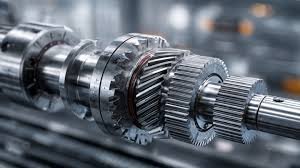
Spezialbohrgetriebe: What It Is and Why It Matters
A Spezialbohrgetriebe is best understood as a purpose-built gearbox for drilling-related applications, especially where a standard drive is not enough. In practical terms, it is a custom gearbox designed to deliver the right balance of speed, torque, durability, and installation fit for a specific drilling machine or drilling process. German gearbox manufacturers describe this kind of engineering as a special-gearbox approach: they build custom solutions for applications such as drilling and milling, and they often develop them from concept through prototype to series production. That matters because drilling jobs can vary dramatically. A light industrial drilling station, a heavy-duty construction machine, and a precision drilling platform may all need different torque ranges, housing sizes, mounting styles, and protection levels.
The reason this topic matters is simple: drilling efficiency is never only about motor power. It is also about how well that power is converted into controlled motion at the drill head. Industrial gearbox makers such as Flender and NORD position their gear units around high torque, high efficiency, robust load handling, and application-specific design. In other words, the gearbox is the bridge between raw motor energy and usable drilling performance. A well-matched Spezialbohrgetriebe helps the machine run more steadily, work more efficiently, and stay productive under load for longer periods.
Spezialbohrgetriebe: The Core Idea Behind a Custom Drilling Gearbox
To understand a Spezialbohrgetriebe, it helps to think beyond the word “gearbox” and focus on the role it plays in the whole drive system. Manufacturers of special gearboxes emphasize customized solutions, high vertical integration, and application-specific engineering. They build gearboxes not just as catalog items, but as matched components for real machines with real duty cycles, real space limits, and real load demands. That is especially relevant in drilling systems, where the drive must often tolerate shock loads, frequent starts and stops, high axial and radial forces, or continuous operation in harsh environments.
This is also why the term Spezialbohrgetriebe can be useful even when it is not a rigidly standardized industry label. In this guide, it refers to a custom or special gearbox that is optimized for drilling applications, including drilling and milling machines and related heavy-duty equipment. The key idea is specialization. Instead of forcing a generic gearbox into a demanding drilling task, the designer chooses a gear solution that fits the machine’s torque target, mounting geometry, service environment, and expected workload. That approach is common in modern industrial drive technology, where manufacturers now offer broad torque ranges, modular platforms, and many application-specific variants.
Spezialbohrgetriebe and Drilling Efficiency: Why the Right Drive Changes Everything
Drilling efficiency improves when the machine can deliver stable torque at the right speed without wasting energy or overstressing components. Industrial gear unit makers consistently highlight that gearboxes are used to provide high output torque, wide ratio options, and efficient drive performance across many industries. NORD, for example, says its geared motors deliver high output torques and high efficiency, while Flender emphasizes reduced power loss and efficient planning and operation in its newest gearbox platform. That combination is crucial in drilling, because a drill that stalls, hunts, or vibrates wastes time, tool life, and energy.
Efficiency also has a long-term side. A better-matched gearbox can reduce unnecessary mechanical stress, support smoother operation, and lower the chance of unplanned stops. Flender’s industrial gearboxes are described as reliable under load and suitable for many applications, while NORD highlights high axial and radial load capacity, robust housings, and long service life. In practice, that means less time spent recovering from failures and more time spent drilling. For any operation where uptime matters, that is just as valuable as raw torque.
The Main Benefits of a Spezialbohrgetriebe
One of the biggest benefits of a Spezialbohrgetriebe is precision. Drilling often demands controlled speed rather than maximum speed. A custom gearbox helps a machine deliver the exact output behavior needed for the tool, the material, and the hole specification. In high-demand environments, that precision can mean cleaner cuts, better hole quality, fewer tool changes, and less operator intervention. Manufacturers of modern gear units repeatedly point to high torque capability and broad ratio ranges as major advantages because those features help the drive match the application instead of forcing the application to adapt to the drive.
Another major benefit is durability under load. Special gearboxes are commonly built for difficult industrial conditions, and gearbox manufacturers market them for applications ranging from construction and mining to mixers, crushers, mills, and other heavy-duty systems. That matters in drilling because torque spikes, vibration, and contamination can damage ordinary drive components quickly. A properly designed Spezialbohrgetriebe can better manage those stresses through stronger housings, better bearing support, optimized gearing, and application-specific design choices. The result is a drive that is built for the task instead of merely surviving it.
A third benefit is space efficiency. Modern gearbox platforms are often built to be compact while still delivering high torque. Flender’s and NORD’s product pages both emphasize compact, modular, and flexible designs, with broad performance ranges and many configuration options. For drilling equipment, that compactness matters because machine designers are often balancing power delivery with limited installation space, alignment requirements, and maintenance access. A well-designed Spezialbohrgetriebe can simplify the whole machine layout and make the drilling system easier to integrate.
Spezialbohrgetriebe in Real-World Applications
Spezialbohrgetriebe are valuable anywhere drilling must be performed reliably, repeatedly, and with consistent force. Gearbox manufacturers’ own application lists show how broad the industrial world of gear units really is: construction machinery, port equipment, pumps, belt systems, mixers, crushers, mills, machine tools, and water-related systems all rely on engineered gear drives. A drilling-focused gearbox fits naturally into that environment because it shares the same core demands: stable torque, rugged operation, and the ability to perform under changing loads.
In practice, that means a Spezialbohrgetriebe may be used in drilling and milling machines, deep-hole drilling setups, foundation and construction drilling rigs, special machine tools, or heavy industrial systems where a controlled rotary motion must be converted into high-force cutting or boring action. The Rögelberg special-gearbox brochure explicitly lists “drilling and milling” among its application areas and explains that its special gearboxes are custom solutions built from concept to ready-to-use product. That is exactly the kind of engineering logic behind a drilling gearbox: match the machine to the task instead of using a generic drive.
The same logic applies in industries where the working environment is unforgiving. Heavy-duty gearbox families are marketed for mining, crushers, conveyors, hoists, mixers, mills, and raw-material applications, which tells you a lot about the level of robustness expected from modern industrial drives. Drilling systems that operate in abrasive, dusty, wet, or high-load conditions benefit from the same engineering mindset. A Spezialbohrgetriebe is therefore not only a component; it is part of the machine’s survival strategy.
How a Spezialbohrgetriebe Improves Drilling Efficiency
The first way it improves efficiency is by helping the motor deliver the right output behavior at the drill head. Gearbox manufacturers emphasize torque, speed ratio, and application-fit design because industrial machines often need lower output speed and higher usable torque than a motor alone can provide. That is especially important in drilling, where stable tool engagement matters more than sheer spinning speed. When the gearbox is properly matched, the machine can maintain consistent feed and rotation under changing load, which helps prevent stalling and reduces wasted motion.
The second way is through reduced energy waste. Flender states that its newer gearbox platform is designed for efficient planning and operation and mentions reduced power loss during operation. NORD likewise highlights high efficiency in its geared motors and notes that efficient geared motor solutions reduce operating costs in energy-intensive applications. In drilling, that matters because every unnecessary loss shows up as heat, vibration, or slower production. A more efficient gearbox does not just save electricity; it makes the whole process more controlled and repeatable.
The third way is by improving uptime. A machine that keeps working without interruption is more efficient than a machine that looks powerful on paper but spends too much time cooling down, being adjusted, or repaired. Flender highlights reliability and high plant availability in its gearbox portfolio, while NORD emphasizes long service life and minimal maintenance in heavy-duty use cases. In a drilling environment, uptime can be the difference between a profitable shift and a costly delay. The right Spezialbohrgetriebe helps protect that uptime.
Why Lubrication and Friction Control Matter So Much
No drilling gearbox can deliver its best performance if friction is left unmanaged. SKF explains that automatic lubrication systems supply the right amount of lubricant at the right intervals, minimizing friction and wear and optimizing machinery service life. SKF also notes that proper lubrication reduces friction and wear, while poor lubrication increases waste and shortens component life. That principle is especially important for a Spezialbohrgetriebe because drilling loads are often continuous, repetitive, and mechanically demanding.
This is where a well-designed gearbox becomes more than a power transmitter. It becomes a managed environment for the bearings, gears, seals, and oil film that keep the system alive. Flender’s new gearbox platform includes integrated intelligence and condition monitoring, while SKF’s lubrication guidance shows how controlling friction and wear improves reliability. In a drilling application, that means fewer surprises, less damage from heat buildup, and a better chance of keeping performance consistent over time. Efficiency is never only about ratio; it is also about friction discipline.
How to Choose the Right Spezialbohrgetriebe
Choosing the right Spezialbohrgetriebe starts with the application itself. The load profile, required output speed, torque demand, mounting orientation, available space, duty cycle, and environmental exposure all influence the final design. Manufacturers of custom gearboxes stress that most industrial solutions are application-specific, and that same mindset should guide your selection process. If the drilling task involves frequent starts and stops, shock loads, or harsh surroundings, the gearbox should be designed with those realities in mind rather than sized only by a catalog number.
You should also pay close attention to torque range and gear ratio. NORD publishes wide torque and ratio ranges across its gear units, and Flender similarly offers a dense ratio network and torque spans that support many industrial uses. That matters because drilling systems rarely benefit from a one-size-fits-all ratio. The ideal gearbox is the one that lets the motor operate in a healthy range while delivering the output behavior the drill actually needs. Too much speed can reduce control; too little torque can lead to stalling. A good Spezialbohrgetriebe keeps both problems in check.
The third selection factor is serviceability. A gearbox that is efficient on day one but hard to maintain will eventually become expensive. Look for features such as robust housings, reliable lubrication planning, access to monitoring options, and clear maintenance guidance. Flender’s platform includes integrated sensors and monitoring functions, and SKF’s lubrication systems show how regular lubrication reduces friction and wear. For drilling operations, these features are not luxuries. They are practical tools for protecting output and reducing total cost of ownership.
Maintenance Tips That Extend Service Life
A Spezialbohrgetriebe will perform best when maintenance is treated as part of production rather than as a reaction to failure. That begins with lubrication. SKF’s documentation is clear that frequent and appropriate lubrication reduces friction, wear, and downtime, and that automated lubrication can help optimize service intervals. In high-load drilling applications, that translates directly into better bearing life, smoother operation, and fewer expensive interruptions.
Alignment and condition monitoring matter too. Flender’s newer gearbox platform includes sensor-based intelligence that tracks speed, temperature, and vibration, helping users identify irregularities early and support proper drive-train alignment. That kind of visibility is extremely useful in drilling, where hidden issues can quickly become tool breakage, shaft damage, or lost production. Even if a system does not have built-in smart monitoring, regular inspection of noise, vibration, temperature, oil condition, and mounting integrity can protect the gearbox and the machine around it.
Build quality is the final piece. Rögelberg describes its own special gearboxes as the result of deep in-house manufacturing, including drilling and milling, gear cutting, heat treatment, assembly, test runs, and painting. That kind of vertical integration matters because a drilling gearbox depends on the quality of every step, from raw material processing to final test. When the production process is disciplined, the finished gearbox has a far better chance of surviving real-world conditions.
Why Spezialbohrgetriebe Is a Smart Choice for Modern Industry
The strongest argument for a Spezialbohrgetriebe is that it solves a real industrial problem: drilling work is demanding, and demanding work rarely performs well with generic equipment. A custom gearbox lets engineers tune torque, speed, efficiency, durability, and size around the machine instead of around a compromise. That is why manufacturers across the gearbox industry emphasize customization, high torque, reliability, and application fit as core selling points. For drilling, those qualities are not just nice to have. They are the foundation of productive operation.
It is also a smart choice because modern industrial gearboxes are increasingly designed to reduce waste, simplify planning, and support long life. Flender highlights lower power loss, shorter planning time, and integrated intelligence, while NORD stresses efficiency, robustness, modularity, and long service life. A Spezialbohrgetriebe that is selected carefully can therefore reduce operating cost in several ways at once: less wasted energy, less wear, fewer stoppages, and better output quality. That is the kind of improvement businesses notice quickly.
Spezialbohrgetriebe: The Bottom Line for Buyers, Engineers, and Operators
If you are evaluating a drilling machine, a retrofit, or a custom industrial project, the gearbox should be treated as a strategic component, not a secondary accessory. The wrong drive can limit productivity, increase maintenance, and make the entire machine feel underpowered. The right Spezialbohrgetriebe can do the opposite. It can help the drill cut more steadily, hold up under load, run more efficiently, and stay in service longer with fewer interruptions. That is why special-gearbox manufacturers invest so much effort in application engineering, torque capacity, and lifecycle performance.
For teams that care about throughput, precision, and long-term reliability, the message is clear: choose the gearbox for the job, not the other way around. A carefully designed Spezialbohrgetriebe is one of the most practical ways to improve drilling efficiency because it aligns mechanical output with real operational needs. In a market where downtime is expensive and quality expectations are high, that alignment is a real advantage.
Spezialbohrgetriebe: Final Thoughts and Strong CTA
The best drilling results rarely come from raw power alone. They come from a balanced system where the motor, gearbox, bearings, lubrication, and machine structure all work together. That is exactly where a Spezialbohrgetriebe proves its value. It brings together custom engineering, high torque delivery, efficiency, durability, and application-specific design in one critical component. Whether the machine is built for drilling and milling, heavy industrial use, or a custom special-purpose line, the right gearbox can transform performance from merely acceptable to genuinely reliable.
If your goal is to improve drilling efficiency, reduce mechanical stress, and build a system that lasts, a custom Spezialbohrgetriebe deserves serious attention. Speak with an experienced gearbox manufacturer or drive-system engineer, share your load profile, duty cycle, and installation limits, and ask for a solution designed around your exact use case. The more specific the requirements, the better the gearbox can perform. For serious drilling projects, that single decision can improve output, reduce downtime, and strengthen long-term profitability.



Post Comment