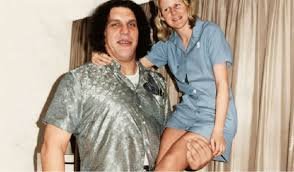
In the world of online search, some keywords reveal more than a person’s name. They reveal curiosity, memory, and a desire to see a story through images. “940 Jean Christensen photos & high res pictures” is one of those search phrases. It suggests that people are looking not only for information, but for visual context, rare images, and a clearer understanding of who Jean Christensen was and why her name continues to matter. That matters for SEO, too: content built around visual intent should answer the reader’s first question quickly, then stay useful long enough to keep them reading. In Jean Christensen’s case, the story connects to wrestling history, public memory, and the lasting fascination with André the Giant, one of the most recognizable figures in professional wrestling and pop culture.
Jean Christensen Photos & High Res Pictures: A Complete Guide to the Person Behind the Search
Jean Christensen is most often described in public coverage as a model and a wrestling public relations professional who became closely associated with André the Giant. Current sources also identify her as the mother of Robin Christensen-Roussimoff, André’s only child. That combination of modeling, wrestling-industry work, and a connection to a global wrestling icon is exactly why her name still attracts attention in photo searches today. People do not just want a name and a date; they want the visual record, the context around the images, and the human story behind them. In other words, the keyword “Jean Christensen” is doing two jobs at once: it is seeking identity and image.
What makes Jean Christensen especially interesting from a content perspective is that she sits at the intersection of celebrity, privacy, and wrestling history. André the Giant’s fame was enormous, extending from the ring to film, television, and modern culture, including his role in The Princess Bride and his place in WWE’s history books. Because André’s image has been preserved so widely, people naturally begin to search for the people around him as well, including Jean Christensen. That creates a strong search intent pattern: a reader starts with “Jean Christensen photos,” but what they really want is a fuller picture of her role in the story and the authenticity of the photos they find.
For that reason, a good article on this topic should not pretend that every image on the internet is equally valuable. High-resolution pictures are only useful when they are identifiable, relevant, and responsibly sourced. A blurry repost on a random website does not satisfy a reader who wants real quality. The best approach is to treat the topic with care: explain who Jean Christensen was, why the public keeps searching for her images, and what kinds of picture sources are most likely to be accurate, usable, and respectful. That gives the article lasting value instead of thin keyword repetition.
Jean Christensen’s public story is also tied to a larger wrestling era when personalities were larger than life and promotional photography played a major role in building public interest. André the Giant became a major attraction in the World Wide Wrestling Federation and later WWF/WWE, helped define some of the most famous moments in wrestling history, and became one of the most recognized figures in the sport. When a person is connected to that kind of legacy, even a limited set of photos can become significant because the images are not just portraits; they are historical artifacts. That is one reason searches for Jean Christensen high-res pictures continue to appear alongside searches for André the Giant and his legacy.
At the same time, search behavior around Jean Christensen also reflects a common modern habit: readers want clarity fast. They do not want confusion, recycled biography fragments, or image pages that promise “rare photos” but deliver nothing useful. They want to know whether the image is real, whether it is from the right period, and whether it is worth their time. That is why content like this should speak directly to user intent. If someone searches for Jean Christensen photos and high-res pictures, they are usually looking for a combination of biography, archival context, and visual authenticity. A successful page should satisfy all three at once.
Another reason the topic performs well is that Jean Christensen is not a celebrity whose life was documented in the same way as a modern influencer or actor. Her name appears mainly in connection with wrestling history and André the Giant’s personal life. That makes images of her feel more valuable to readers, because they may be harder to locate and easier to misattribute. The absence of a huge public image archive creates a stronger appetite for any verified photo that does exist. In SEO terms, scarcity increases interest, and interest increases clicks, especially when the title promises photos and high resolution.
For readers, though, scarcity should not be treated as an excuse for sloppy publishing. If a page is going to rank well for Jean Christensen photos, it must be built with trust in mind. That means avoiding sensational claims, avoiding fake captions, and avoiding unsupported stories that spread from one low-quality site to another. The best content on this subject should feel calm, informed, and carefully written. It should help the visitor understand what is known, what is widely repeated, and what should be treated with caution. That is the difference between a clickbait gallery and a page that can actually hold search traffic.
A strong article also benefits from explaining the historical setting in plain language. André the Giant’s career spanned decades, from his beginnings in France to his rise in North American wrestling and beyond. WWE and Britannica both note his enormous stature, his iconic presence in wrestling, and the importance of his mainstream fame. When readers search for Jean Christensen images, they are often brushing up against that same history. The better you explain the era, the more meaningful the photographs become, because they stop being isolated pictures and start becoming part of a larger story.
In a practical sense, a “high-res picture” is not only about pixel count. It is about legibility, composition, and preservation. A high-resolution image should allow the viewer to see facial details, clothing, background context, and any period-specific clues that help identify when and where the photo was taken. That matters especially for a figure like Jean Christensen, where images may circulate without complete captions. A clear photo can help confirm whether a picture is from a wrestling-related event, a candid archive, or a later tribute page. Good image quality turns a vague search into something usable.
That is also why licensing and source quality matter. If you are creating content that aims to rank for Jean Christensen photos, readers need confidence that the visuals are not stolen, distorted, or mislabeled. Search engines increasingly reward pages that demonstrate usefulness and credibility, and images play a major role in that trust. A trustworthy page will usually do better when it includes descriptive captions, honest context, and references to the subject’s real-life connection to wrestling history. The goal is not to flood the page with images. The goal is to make every image count.
Jean Christensen’s story becomes even more relevant when viewed through the lens of family legacy. Robin Christensen-Roussimoff, Jean’s daughter, has remained part of the public conversation around André the Giant’s legacy, and WWE’s 2026 Hall of Fame coverage again brought that family connection into view. That keeps Jean Christensen’s name from disappearing into the background. Instead, it continues to appear in conversations about wrestling history, documentary coverage, and the descendants of famous entertainers. For searchers, that means “Jean Christensen” is not a dead-end keyword; it is a doorway into a broader historical narrative.
It is also worth recognizing that people often search for photos when they are trying to connect emotional dots. A reader may have seen André the Giant in a documentary, on a poster, in a wrestling clip, or in a vintage entertainment article, and then become curious about the woman connected to his private life. That curiosity is normal and human. A good article respects that curiosity by being informative without being invasive. It should never turn a real person into a rumor machine. Instead, it should help the reader understand why the person matters and why the pictures carry historical weight.
If you are building this page for SEO, the structure matters as much as the words. Search engines favor pages that give a direct answer, then expand naturally into related questions. That is why the topic should move from identity, to context, to image quality, to legacy, and finally to reader action. A page that only repeats “Jean Christensen photos” will look thin. A page that explains why those photos matter, how to identify good ones, and what the searcher is likely hoping to find has a much better chance of keeping visitors engaged. Engagement is not just about time on page; it is about reducing the feeling that the user needs to go back to Google for a better answer.
One of the smartest ways to strengthen a page like this is to speak directly to image intent without sounding robotic. Phrases such as “rare Jean Christensen photographs,” “high-resolution Jean Christensen pictures,” and “Jean Christensen visual archive” can be used naturally in context. The key is to keep the language readable. Readers are quick to leave pages that sound stuffed with keywords. They stay longer when the article feels like a knowledgeable guide rather than a search-engine experiment. That kind of writing supports both user satisfaction and long-term ranking potential.
Jean Christensen’s public identity also benefits from careful framing because the internet tends to flatten complex people into one-liners. She was not merely “someone related to André the Giant.” The available sources describe her as a model and a wrestling PR professional, which gives her a real professional identity in her own right. When content acknowledges that, it becomes more balanced and more interesting. It also helps the page avoid the common problem of making a woman’s entire public relevance depend on her relationship to a famous man. Balanced writing is better writing, and it often performs better too.
That balance matters in the image section of a page as well. Captions should do more than name the subject. They should identify the moment, explain the context where possible, and avoid overclaiming when the photo’s origin is uncertain. For example, a caption can say that the image appears to show Jean Christensen in a wrestling-related context or around the period when she was connected with the industry, rather than presenting speculation as fact. That small discipline builds credibility. Readers can usually feel the difference between a caption written by someone who cared and one written only to fill space.
A page built on that principle can also encourage more interaction. A brief invitation at the end can ask readers to share the article if they found the historical context helpful, or to bookmark it if they are researching wrestling history and archival imagery. That kind of CTA works best when it feels natural. Instead of shouting “buy now” or “click here,” the page can invite people to explore, save, and return. A thoughtful CTA often performs better because it matches the emotional tone of the article. In a topic like this, curiosity is the engine, so the call to action should simply help curiosity continue.
Another thing to keep in mind is how readers search across related names. Someone looking for Jean Christensen photos may also search for André the Giant, Robin Christensen-Roussimoff, wrestling PR, or vintage wrestling publicity images. That means the article should include related context in a natural way. It is not enough to mention the subject once and move on. The surrounding history gives the page semantic depth, which helps both readers and search engines understand what the article is really about. High-quality topical coverage beats shallow repetition every time.
Jean Christensen’s association with André the Giant also places her in a story that remains culturally active. André’s legacy continues through documentaries, retrospective articles, WWE content, and ongoing public fascination with his life and career. Britannica, WWE, and recent coverage all show that André remains an enduring reference point in wrestling history and pop culture. Because Jean Christensen is linked to that legacy through family and biography, her name continues to circulate in searches. That is exactly why the topic has lasting SEO value rather than only temporary interest.
When writing for this query, it also helps to think like a curator. A curator does not just gather images; a curator organizes meaning. That means telling readers why Jean Christensen photos matter historically, why some pictures are more authoritative than others, and how to judge image quality without being misled by low-effort reposts. If a page does that well, it becomes useful for casual readers, wrestling fans, researchers, and anyone who simply wants a better understanding of the name behind the search. Good SEO content often succeeds because it serves more than one audience without losing focus.
There is also a broader lesson here about image-based search. People rarely search for photos in isolation. They usually want identity, story, and confirmation all at once. That means a successful article should answer unspoken questions: Who is Jean Christensen? Why does she appear in wrestling history? Why are real photos of her valuable? What makes an image worth trusting? Once those questions are addressed, the content feels complete. And when content feels complete, it is easier for it to earn attention, shares, and repeat visits.
If you are publishing this on your site, the final on-page experience should be clean and inviting. Use a clear headline, an H2 with the focus keyword, a readable font size, and image placements that do not interrupt the flow of the article. Keep the page fast, descriptive, and mobile-friendly. Add alt text that explains the image truthfully instead of stuffing keywords. These details may seem small, but they all support a better user experience, which is exactly what search engines want to reward. In a competitive search space, small improvements often make the difference.
What makes the Jean Christensen topic especially compelling is that it sits in a sweet spot between public fame and private history. There is enough recognition to spark searches, but not so much public overexposure that the topic feels exhausted. That means a carefully written article can still stand out. By offering context, clarity, and respect, the page does more than chase keywords. It becomes a useful reference for anyone who wants to understand the subject behind the search phrase “940 Jean Christensen photos & high res pictures.”
In the end, the best way to approach this keyword is to treat it as a discovery journey. Readers are not just looking for an image; they are looking for confirmation that the image means something. Jean Christensen’s connection to André the Giant, her own work in the wrestling world, and the ongoing public interest in her family legacy give the topic enough depth to support a strong, SEO-friendly article. Write it with care, keep the facts grounded, and make the visual search feel worthwhile. That is how this topic earns clicks, trust, and lasting engagement.

Post Comment