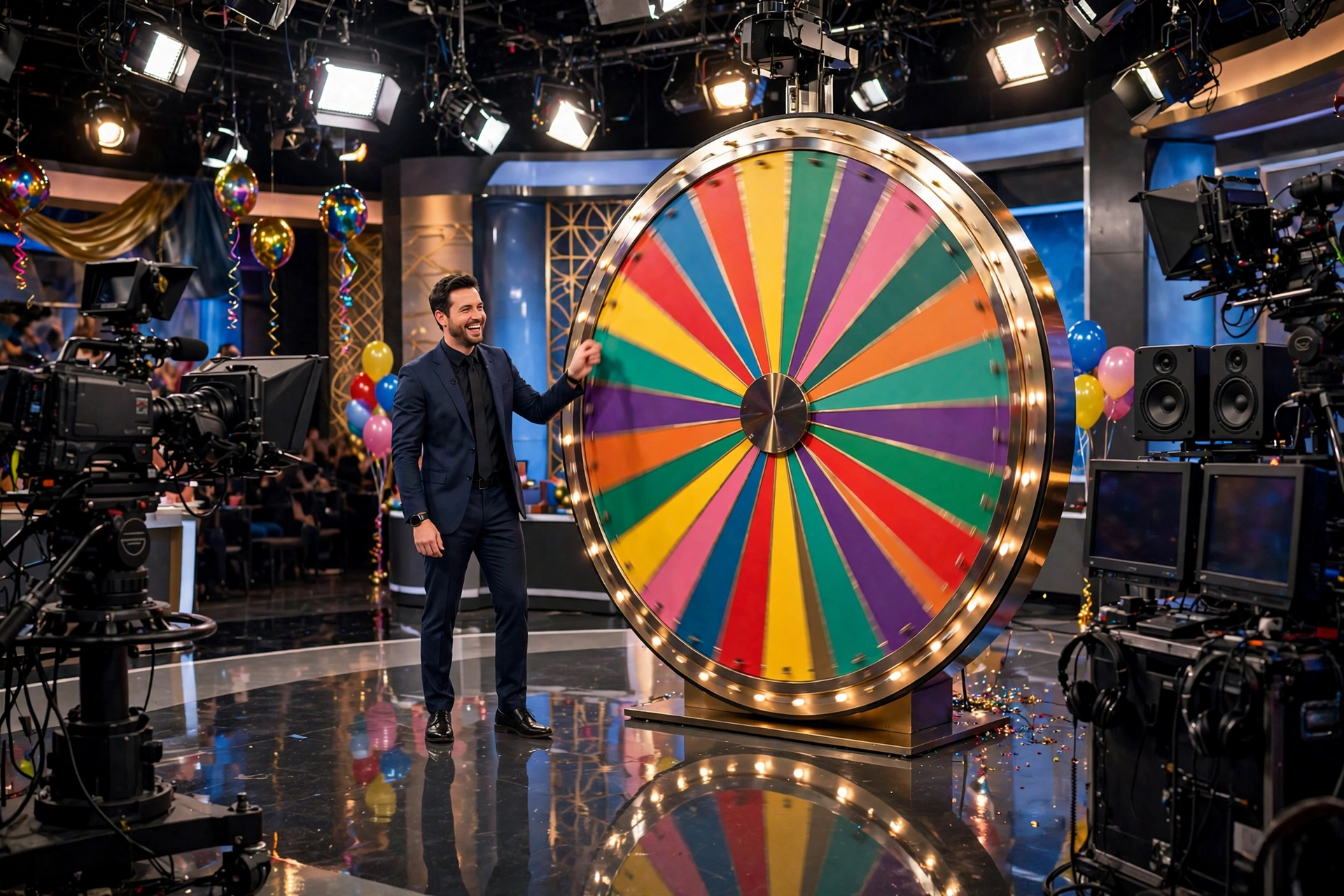
I’ll be honest: the first time I opened a live casino game show lobby, I thought someone had mixed up a casino with a TV studio. A grinning host, a giant spinning wheel, lights everywhere — and a chat window scrolling too fast to read.
If you’ve ever wondered how do live casino game shows work, you’re not alone. These games now pull bigger crowds than most blackjack tables. In this guide I’ll break down what’s happening behind the lights — how betting works, how bonus rounds trigger, what multipliers do, and what the RTP numbers mean for your money.
Table of Contents
How Do Live Casino Game Shows Work? The Core Mechanic
At the heart of almost every live casino game show sits one of two things: a spinning money wheel or a number-draw mechanic. The host spins the wheel (or the game draws balls), the result lands, and every bet riding on that result gets paid out instantly. Then it all starts again, usually within a minute or two.
To answer how do live casino game shows work in one breath: you pick segments or numbers to bet on, place them during a short betting window, a live host triggers the spin or draw on camera, and the game software settles every bet the moment the result lands. What makes it feel different from slots is the presentation — the host, the studio, the crowd energy in the chat.
Most wheels are split between number segments (like 1, 2, 5, and 10) and bonus-game segments. Numbers pay out at face value when they land. Bonus segments whisk qualifying players into a separate mini-game — and that’s where the headline multipliers live.
What These Shows Actually Are: An Honest Tour of the Big Five
Crazy Time (Evolution) is the flagship. A 54-segment wheel with four bonus games — Coin Flip, Cash Hunt, Pachinko, and the Crazy Time wheel itself — plus a Top Slot that adds multipliers before every spin. It’s chaotic, it’s fun, and the bonuses genuinely feel like events.
Monopoly Live (Evolution) takes the money-wheel format and bolts on a virtual 3D Monopoly board. Land on 2 Rolls or 4 Rolls and Mr. Monopoly walks the board collecting prizes, taxes, and multipliers for you. It’s slower and more strategic-feeling than Crazy Time.
Dream Catcher (Evolution) is where it all started: a simpler wheel with just numbers and x2/x7 multiplier segments that re-spin the wheel. No elaborate bonus games. If you want the game-show buzz without the learning curve, start here.
Deal or No Deal Live (Evolution) plays like the TV show. First a qualification round on a slot-style game, then the briefcase round against the Banker. The tension of opening cases one by one is genuinely addictive.
Mega Ball (Evolution) is bingo rebuilt for casino players: you buy up to 200 cards, 20 balls get drawn, and a Mega Ball with a random multiplier closes the round. Calmer than the wheel shows, but the multipliers can be huge.
For full rule-by-rule breakdowns, the game show guides at LiveCasinos are the best reference I’ve found.
The Studio and Production Behind the Stream
If you’re asking how do live casino game shows work, start with the studio — because the production is the product. These aren’t webcams pointed at a felt table. They’re purpose-built TV studios, mostly run by Evolution, Pragmatic Play Live, Playtech, and Ezugi, operating around the clock with rotating hosts.
Multiple camera angles track the host and the wheel, while optical character recognition (OCR) reads the result the instant it lands — that’s how thousands of bets settle in seconds with no dealer doing maths. The wheels are real, physical equipment; the magic is hardware and software settling everything together in real time.
One thing that surprised me: a single round can host thousands of players, all betting independently on the same spin. The wheels, OCR readers and camera switching are the same behind-the-scenes machinery I described when explaining how live dealer studios work, just dressed up for television with bigger budgets and louder hosts.
Placing Bets, Betting Windows and Minimums
So, how do live casino game shows work at the betting level? Each round opens a betting window that usually lasts around 10 to 15 seconds. You see the betting grid — wheel segments, numbers, or bingo cards — you pick your chip value, and you click where you want your money.
You can spread bets across segments or go all-in on one bonus. Most shows offer repeat-bet and auto-play buttons so you don’t rebuild your bet every round. Once the window closes, bets are locked — late clicks don’t count.
Then the host spins or draws, the result lands, and the software pays everyone in seconds. Number bets pay at face value (bet on 5, win 5 to 1). Bonus segments only pay if you bet on them — watching the wheel land on Crazy Time when you didn’t is a special kind of heartbreak.
The good news: minimums are low — most game shows let you bet from around 10p or 0.10 euro per segment, making them some of the cheapest live games to sit at. And how do live casino game shows work on mobile? Almost identically — the streams are built mobile-first, the betting grids resize cleanly, and I actually prefer the portrait layout on my phone. Just use decent Wi-Fi, because a dropped stream mid-bonus-round is miserable.
Now the demo question: no, you can’t play for free — every round is a real, shared, scheduled event with real outcomes, so there’s no practice mode for a live TV broadcast. But most lobbies offer watch-only mode. I strongly recommend watching ten or fifteen rounds before betting a penny.
How Bonus Rounds Trigger — and Why They’re the Real Draw
Here’s the golden rule: you only get into a bonus round if you placed a bet on that bonus segment. The wheel landing on Coin Flip means nothing for you if your chips were all on number 2.
How do live casino game shows work once a bonus round starts? Simple: only qualifying players get in — everyone else just watches. In Crazy Time, Coin Flip shows a coin with two multiplier sides, Cash Hunt gives you 108 targets to shoot at, Pachinko drops a puck down a peg board, and the Crazy Time wheel opens a massive virtual wheel with the biggest prizes.
In Monopoly Live, 2 Rolls or 4 Rolls sends Mr. Monopoly onto the virtual board for that many dice rolls, collecting every prize he lands on. In Deal or No Deal Live, qualifying gets you into the briefcase round against the Banker.
Why are bonuses the real draw? Because base-game number bets pay small and steady, while bonus rounds are where multipliers climb into the hundreds and thousands. That’s the trade-off the whole format is built on: frequent small wins versus rare, dramatic ones.
Multipliers, Top Slot Wins and Chance Cards
How do live casino game shows work their multiplier magic? Before most spins, something random boosts the payout. In Crazy Time it’s the Top Slot — a two-reel slot above the wheel that pairs one bet spot with a multiplier (like 5x on number 1), applied if the wheel lands on that spot.
Monopoly Live uses Chance cards: land on a Chance segment and you get either a cash prize or a random multiplier applied to your bet. Dream Catcher is simpler — land on x2 or x7 and the wheel re-spins with all wins multiplied. Mega Ball’s Mega Ball can carry multipliers up to 100x on your card lines.
The key detail: multipliers only apply if you actually won the underlying bet. A 50x multiplier on a segment you didn’t bet on is just scenery. This is why experienced players cover the segments that the Top Slot tends to boost — they’re buying the multiplied outcomes, not just the base wins.
RTP and House Edge: Not Every Bet Is Created Equal
How do live casino game shows work when it comes to the house edge? Here’s the part most guides skip: the RTP isn’t one number per game. It changes depending on what you bet on.
Take Crazy Time: provider figures put the RTP around 94.33% to 96.08% depending on your bet. Number 1 bets sit near the top of that range; the big bonus bets sit lower. Monopoly Live is quoted around 96.23% overall, Dream Catcher around 96.58%.
The pattern is consistent: the flashier the bet, the worse the RTP tends to be. Bonus segments cost you in house edge terms. That’s the entertainment tax — you’re paying for the spectacle with slightly worse odds.
Compare that to the classics: European roulette sits at 97.3%, and basic-strategy blackjack is around 99.5%. Game shows are worse value per pound wagered, full stop. I’m not saying don’t play them — I play them — but go in knowing you’re trading odds for entertainment, the same way a cinema ticket costs more than streaming at home.
Volatility Compared to Classic Table Games
It helps to think of game shows in two gears. Number bets (1s and 2s) are low volatility: they hit often, pay small, and your bankroll drifts down slowly. Bonus bets are high volatility: they miss for long stretches, then one bonus round can pay 50x or 500x.
Classic table games sit in the middle. Blackjack grinds with low volatility and tiny edges. Roulette’s even-money bets are steadier than any game-show wheel. Baccarat barely moves at all.
What does this mean for your session? If you bet only bonus segments, expect long dry spells — bring a bankroll that can survive 30 or 40 dead rounds. If you mix numbers with a small bonus side-bet, you get the steady drip of small wins funding your lottery tickets into the bonus games. That’s how I play, and it’s the sanest way to stretch a budget.
Myths, Mistakes and Quick Answers
The biggest myths about how do live casino game shows work all come down to timing. No, a bonus is not “due” after a dry spell — every spin is independent, and the wheel has no memory. No, the host cannot influence where it stops. The patterns you think you see in the results history aren’t predictive; they’re randomness wearing a disguise.
The mistakes I see most: betting on every segment (which just guarantees the house edge on everything), chasing a bonus that hasn’t hit in 50 rounds by doubling bets, and ignoring the RTP spread to load up on the worst-value bets because they look exciting.
Still wondering how do live casino game shows work in practice? Here’s the short version: real hosts, real wheels, software-settled bets. Are they rigged? Licensed studios run audited equipment — the house edge is already in the maths, so rigging would be pointless risk. Can you play for free? Not with real bets, but watch-only lobbies cost nothing. Best for beginners? Dream Catcher — the simplest wheel, and you’ll understand the whole format in ten minutes.
Final Verdict: Are Live Casino Game Shows Worth Your Money?
So, how do live casino game shows work in one sentence? You bet on wheel segments or numbered balls while a live host runs the show, and the bonus games decide whether your session flies or flops.
Here’s my honest verdict: these are entertainment products first and gambling products second. The production values are genuinely excellent, and a bonus round hitting at the right moment is one of the best rushes in online gambling. But the maths is worse than the classics, and the volatility can chew through a budget fast if you chase bonuses.
Play them like a night out, not an investment. Set a budget before you open the lobby, mix number bets with small bonus side-bets, watch a few rounds free first, and walk away when the fun stops. Do that, and live casino game shows are some of the best entertainment your money can buy.
Gamble responsibly. 18+ only.

2 comments