I still remember the first time I sat down at a casino table and realised I had no idea what I was actually up against. I knew the games looked fun, I knew people sometimes won big, and I knew the casino always seemed to stay in business, but I could not have explained what are casino odds in a way that would have helped me make a smarter choice. That gap cost me money, because I was picking games based on flashing lights and gut feeling instead of maths. Over time I learned that odds are not a mysterious code for experts only. They are simply a way of describing how likely something is to happen, and how much you get paid when it does. Once you understand that basic idea, every game in the casino starts to make more sense, and you can stop guessing and start choosing with your eyes open. In this guide I will walk you through what the numbers really mean, why the house always has a small advantage, how return to player works, and how your chances differ from one game to another, using plain language and real examples from slots, roulette, blackjack, baccarat, and craps.
Table of Contents
What Are Casino Odds? A Simple Definition
When I first asked what are casino odds, I expected a complicated formula. The truth turned out to be much simpler. The phrase describes the likelihood of a particular outcome in a casino game, and the payout you receive if that outcome happens. If you bet on a single number in roulette, your chance of winning is low, but the payout is high. If you bet on red or black, your chance of winning is much higher, but the payout is far smaller. Odds tie those two ideas together: probability on one side, payout on the other.
I find it helps to think of odds as a price tag. Every bet has a price, and that price is the small advantage the casino keeps over the long run. In the short term anything can happen. You can sit down, place a few bets, and walk away a winner. I have done it myself, and so have plenty of other players. Over thousands of bets, though, the maths starts to assert itself. The casino does not need to win every hand or every spin. It only needs to win a tiny fraction more often than it loses, and that tiny fraction adds up to a very large business. Understanding odds does not turn you into a guaranteed winner, because no honest guide can promise that. What it does is help you avoid the worst bets, pick games that give you a fairer run for your money, and set realistic expectations about what a session is likely to look like.
The House Edge: Why the Casino Always Has an Advantage
The house edge is the built-in advantage that every casino game gives to the casino, expressed as a percentage. If a game has a house edge of 5%, it means that, on average and over a very long period, the casino expects to keep about £5 out of every £100 wagered on that game. It does not mean you will lose exactly £5 every time you bet £100. In a single session you might win £50 or lose £80. The house edge is a long-term average, not a prediction about your next bet.
I used to think the house edge was something sneaky, but it is really just the cost of the game. Casinos have staff to pay, buildings to maintain, and licences to hold. The house edge is how they pay for all of that and still make a profit. Every game is designed so that the payout is slightly less than the true probability of winning would justify, and that small gap is where the casino earns its money. If you want to dig deeper, I have written about how the house edge works and how it differs from one game to another. The key point is simple: a lower house edge is better for you. A game with a 0.5% edge will, on average, eat through your money far more slowly than a game with a 10% edge, and that difference can mean the difference between an evening of entertainment and a bankroll that disappears in twenty minutes.
RTP: The Flip Side of the House Edge
Return to player, usually shortened to RTP, is the other side of the same coin. If the house edge tells you what the casino expects to keep, RTP tells you what players collectively expect to get back. A game with a 96% RTP has, in theory, a 4% house edge, while a game with a 90% RTP has a 10% house edge. You will see RTP quoted most often for slot machines, and it is usually printed in the game information or paytable.
I like to think of RTP as a long-term promise rather than a short-term guarantee. A slot with 96% RTP does not return £96 for every £100 you personally put in during your session. You might put in £100 and get back £20, or put in £20 and win £200. The RTP figure is calculated over millions of spins, across every player who ever plays that game, so your own results in a single session can be wildly different, and that is completely normal. What RTP is genuinely useful for is comparison. If you have a choice between two similar slot games, one with 96% RTP and one with 91% RTP, the first is the better deal on paper. It will still take your money over time if you play long enough, because the edge is still there, but it should take it more slowly. RTP does not tell you anything about volatility, which is how bumpy the ride will be. A high RTP game can still go through long dry spells, while a low volatility game might pay small wins frequently but rarely deliver anything big.
Probability vs Payout Odds: Two Different Numbers
This is where the question of what are casino odds gets interesting, because two different kinds of odds are often talked about as if they were the same thing. The first is probability, which is your actual chance of winning a bet. The second is payout odds, which is how much the casino pays you when you win. In a perfectly fair game, those two numbers would match. In a casino, they almost never do, and the gap between them is the house edge.
Let me give you a simple example using a coin toss. If you and I tossed a fair coin and you bet £1 on heads, your probability of winning is 50%, or one in two. A fair payout would be double your money: you stake £1 and get £2 back. Now imagine I offered you only £1.90 back when you win. You would still win half the time, but over many tosses you would slowly lose money, because your wins pay slightly less than they should. That small shortfall is the house edge in miniature. Roulette works in a similar way. On a European wheel there are 37 numbers, so your chance of hitting a single number is one in 37, yet a fair payout would be 36 to 1 while the casino actually pays 35 to 1. That one-unit difference might look tiny, but it applies to every single-number bet ever placed, and it is the reason the game carries a house edge of about 2.7%. Once you see this pattern, you start to notice it everywhere: the payout is always just a little less generous than the true probability would demand.
Slots Odds: Why Every Spin Is Independent
People often ask me what are casino odds on slots, and my honest answer is that they vary more than on any table game, and that every spin is independent. Many players talk about a machine being hot or cold, or due for a payout, as if the machine remembers what happened before. It does not. Every spin on a modern slot is decided by a random number generator, software that produces thousands of random outcomes every second. The moment you press the button, the machine locks in one of those outcomes, and the previous spin has no influence on the next one at all.
That independence is the key to understanding slot odds. Your chance of hitting a jackpot is the same on your first spin as it is on your hundredth spin, and it is the same whether the machine just paid out or has not paid out for hours. There is no pattern to spot and no timing trick that changes the maths. I know that can feel disappointing if you were hoping for a clever strategy, but it is also freeing. It means you can stop chasing a machine that owes you a win, because it owes you nothing. The house edge on slots varies enormously. Some machines have an RTP of around 96% to 98%, which means an edge of roughly 2% to 4%, while others, particularly in some land-based venues, can have an RTP closer to 88% or 90%, an edge of 10% to 12% or more. That is why I check RTP when I can: two machines can look identical on the outside and treat your money very differently on the inside.
Roulette Odds: European vs American
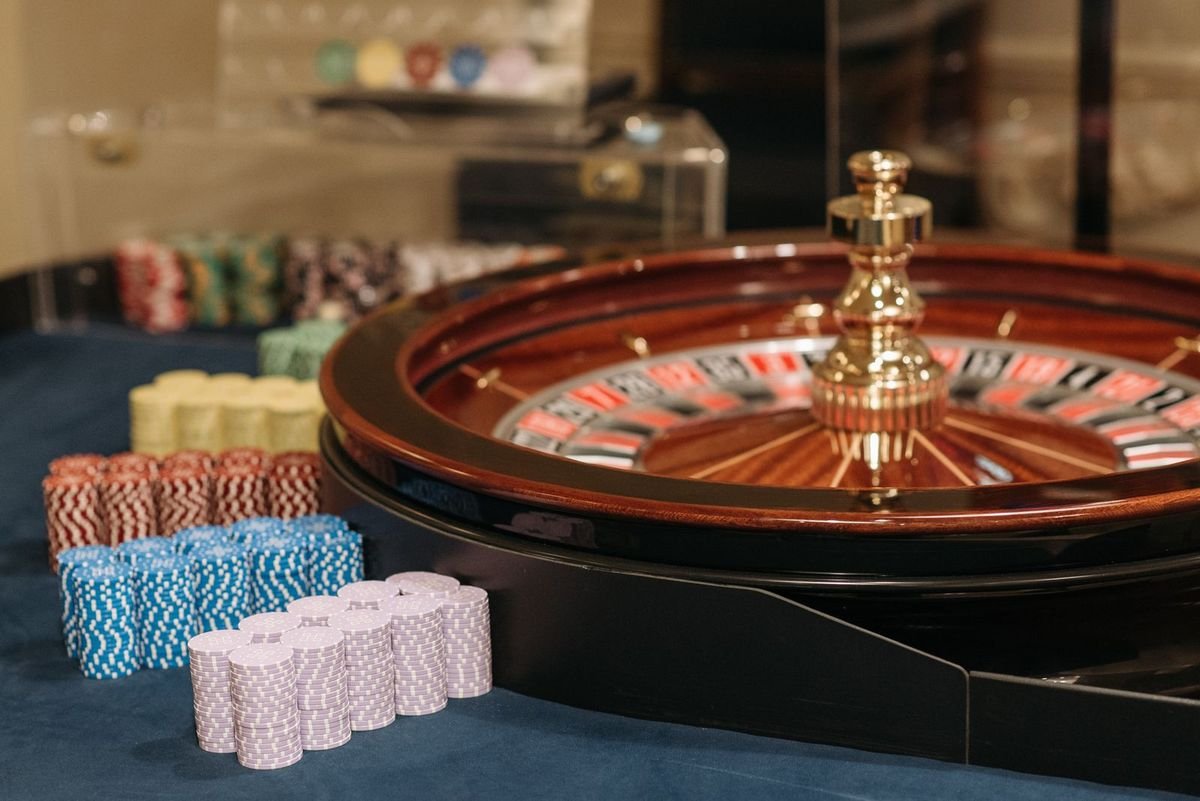
If you ask what are casino odds at the roulette table, the answer depends first on which wheel you are playing. The European wheel has 37 pockets: the numbers 1 to 36 plus a single zero. The American wheel has 38 pockets: the same numbers plus a single zero and a double zero. That one extra pocket almost doubles the house edge, from about 2.7% on the European wheel to about 5.26% on the American wheel. If you have a choice between the two, the European version is the better bet every single time.
The reason is simple. The payouts are identical on both wheels: a single number pays 35 to 1, and red or black pays even money. Your chance of winning each of those bets, however, is slightly lower on the American wheel because there is one more pocket that can beat you. You are being paid the same amount for a slightly worse chance, and the casino pockets the difference. I always look for a European wheel when I play roulette, and I would encourage you to do the same. Within a single wheel, the different bets carry different levels of risk but share the same house edge. Betting on a single number gives you a low chance of winning and a large payout, while betting on red or black gives you a much higher chance of winning, close to 48.6% on a European wheel, and a payout of double your money. None of these bets is smarter than the others in terms of the house edge; they simply offer different trade-offs between how often you win and how much you win when you do. Some French roulette tables offer a rule called la partage, which returns half your even-money bet when the ball lands on zero and reduces the edge on those bets to roughly 1.35%, which is well worth your attention if you ever see it.
Blackjack Odds: The Game Where Skill Matters
When players ask what are casino odds in blackjack, the answer is different from other games because your decisions genuinely affect your chances. In roulette or slots, you place your bet and the outcome is entirely out of your hands. In blackjack, you choose whether to hit, stand, double down, or split, and those choices change the house edge in a measurable way. Played with good basic strategy, blackjack can have a house edge of around 0.5%, one of the lowest figures you will find anywhere in a casino. Played by guesswork, that edge can rise to 2% or more.
Basic strategy is a set of rules worked out by mathematicians that tells you the best move for every combination of your hand and the dealer’s visible card. It does not guarantee a win on any particular hand. It simply tells you which decision gives you the best expected result over the long run. I learned basic strategy from a simple chart that I kept nearby while I practised, and it made a noticeable difference to how long my money lasted. The specific rules of the table matter too. A game that pays 3 to 2 for a blackjack is much better for you than a game that pays 6 to 5, and a game where the dealer stands on soft 17 is slightly better than one where the dealer hits. Before I sit down at a blackjack table, I check the payout for blackjack and the dealer rules, because those two details tell me most of what I need to know about how fair the game is. Card counting, by contrast, is extremely difficult to do well in practice, casinos watch for it closely, and it is not a realistic option for most casual players, so basic strategy is the practical skill to focus on.
Baccarat Odds: Banker, Player, and Tie
Baccarat has a reputation for being a high-roller game, but at its core it is one of the simplest games in the casino. You bet on one of three outcomes: the banker hand wins, the player hand wins, or the two hands tie. You do not make any decisions during the hand. The cards are dealt according to fixed rules, and you simply wait to see who wins. That simplicity is part of its appeal, and the odds are surprisingly friendly as well.
The banker bet is the best of the three, with a house edge of about 1.06%. That low figure is the reason the casino takes a small commission, usually 5%, on winning banker bets. Even after that commission, the banker bet remains the best value on the table. The player bet is only slightly worse, with a house edge of roughly 1.24%. Both are excellent figures by casino standards, and they are the reason baccarat is often recommended to players who want a simple game with a low edge. The tie bet is a very different story. It usually pays 8 to 1 or 9 to 1, which looks tempting, but your chance of a tie is low, and the house edge on this bet is around 14% or more. That is a huge gap compared with the banker and player bets, and it is the main trap in baccarat. If you want to play baccarat, stick to banker or player and leave the tie bet alone. Because the game involves no skill, there is no strategy that can improve your odds beyond choosing the right bet, so set your limits before you start and treat any win as a pleasant bonus.
Craps Odds: The Pass Line and Beyond
Craps can look intimidating from the outside. The table is covered in markings, players are shouting, and chips seem to be flying in every direction. Underneath all of that noise, though, the game is built around a simple idea: two dice, and the numbers they produce. Once you understand the pass line bet, which is the most basic bet in the game, the rest starts to fall into place.
The pass line bet has a house edge of about 1.41%, which makes it one of the fairer bets in the casino. You win if the shooter rolls a 7 or 11 on the first roll, lose if they roll a 2, 3, or 12, and enter a second stage if they roll any other number. That second stage, called the point, adds some drama to the game, but the maths stays the same. I found craps much less scary once I realised I could ignore most of the exotic bets on the table and just focus on this one straightforward wager. There is also a bet called taking odds, which is one of the rare bets in a casino that carries no house edge at all. After a point is established, you can place an additional bet behind your pass line bet that pays out at true odds, and the casino does not take a cut from it. The catch is that you have to make a pass line bet first, and the casino limits how much you can place as an odds bet, but even so it is one of the best-value moves in any casino game. Most other bets on a craps table are far less generous, with proposition bets on specific numbers carrying an edge of 10% or more, so if you stick to the pass line, take odds when you can, and avoid the flashy centre-table bets, you will be playing one of the fairest games the casino offers.
How to Compare Casino Games Using Odds
So what are casino odds across different games, taken together? The comparison is clearer than most players expect. Blackjack with basic strategy sits at the top, with a house edge of around 0.5%. Baccarat banker and player bets come next, at roughly 1.06% and 1.24%. The craps pass line follows at about 1.41%. European roulette sits at about 2.7%, while American roulette is nearly double that at about 5.26%. Slots vary the most, from roughly 2% on a generous machine to 10% or more on a poor-paying one. These figures are approximate, and they shift slightly with the exact rules, but they give you a clear sense of the ranking.
When I compare games, I look at the house edge first, then at how much skill the game involves, and finally at how much I enjoy playing it. A low house edge is important, but it is not the only thing that matters. A game you find boring is not worth playing just because the edge is small, and a game you love is not a good choice if its edge is so large that your money disappears in minutes. The best game for you is usually a balance between a fair edge and genuine enjoyment. I also think about how fast the game moves. Blackjack hands can be dealt quickly, which means you can place many bets in a short time, while roulette spins take longer and slots can be played at a very rapid pace. A low house edge does not help much if you are placing hundreds of bets an hour, because the total amount wagered adds up quickly. It is worth consulting a reliable reference when you want to double-check the figures for a specific game or variation. The Wizard of Odds is a well-known resource that breaks down the maths behind many casino games in detail, and I use sites like that when I want to verify a number before I sit down at a table I have not played before.
Common Myths About Casino Odds
A common myth is that once you know what are casino odds, you can beat the house with a clever system. That is simply not true. Casino floors are full of stories that sound convincing but fall apart when you look at the maths. One of the most common is the idea that a machine or a table is due for a win after a long losing run. As we saw with slots, each spin or hand is independent. The game does not remember what happened before, and it does not owe you a win to balance things out. Believing in due wins is one of the fastest ways to chase losses and spend more than you planned.
Another myth is that betting systems can beat the house edge. Systems like doubling your bet after every loss, often called the Martingale, sound clever in theory. In practice, they run into table limits and the simple fact that your bankroll is not infinite. A long losing streak will eventually arrive, and when it does, the amounts you need to bet become very large indeed. No betting pattern changes the underlying odds; it only changes how your wins and losses are distributed across a session. A third myth is that the casino changes the odds when you are winning. In a regulated casino, the games are fixed in the way I have described, and they do not adjust themselves to target individual players. What does happen is that short-term results vary wildly. You can win for an hour on a game with a 5% edge and lose for an hour on a game with a 0.5% edge. That variance is normal, and it is what keeps the games exciting. I have also heard players say that certain times of day are luckier, or that a particular dealer is hot or cold, but the dice, the cards, and the random number generator do not know what time it is or who is dealing.
Practical Tips for Using Odds to Choose Games
My final tip is simple: before you sit down, remind yourself what are casino odds for the game you are about to play, and let that knowledge guide your choices. First, learn the house edge of the games you like most, and favour the ones with the lowest edge when you have a choice. That single habit will do more for your bankroll than any betting system ever will. Second, check the specific rules before you play. European roulette beats American roulette, 3 to 2 blackjack beats 6 to 5, and a slot with 96% RTP beats one with 90% RTP. Small details add up.
Third, treat your bankroll as a budget for entertainment, not as an investment. Decide before you start how much you are comfortable spending, and stop when you reach that limit, whether you are winning or losing. I find it helps to think of that money as already spent, like the price of a ticket to a show, and anything I bring home is a bonus. That mindset takes the pressure off and makes the session far more enjoyable. Fourth, slow down. The faster you play, the more bets you place, and the more chances the house edge has to work against you. Taking your time, chatting with other players, and enjoying the atmosphere are not just pleasant extras; they are practical ways to make your money last longer. Finally, remember that no amount of knowledge about odds can turn a negative-expectation game into a profitable one over the long run. The aim is not to beat the casino. The aim is to have fun, make your money last, and walk away feeling that you played wisely.
Frequently Asked Questions
What are casino odds in simple terms?
Casino odds describe how likely you are to win a particular bet and how much you get paid when you win. A low chance of winning usually comes with a higher payout, while a high chance of winning comes with a smaller payout. The small gap between the true chance and the payout is what gives the casino its advantage.
Which casino game has the best odds for players?
Blackjack played with good basic strategy is usually the best choice, with a house edge of around 0.5%. Baccarat banker bets at about 1.06% and the craps pass line at about 1.41% are also strong options. Slots and American roulette tend to be less favourable, so they are worth approaching with more caution.
Does a higher RTP always mean a better slot game?
A higher RTP is generally better, because it means the machine returns more to players over the long run. It does not guarantee that you will win in a single session, and it tells you nothing about volatility. A high RTP game can still have long dry spells, so you should consider both RTP and volatility together.
Can I improve my odds by using a betting system?
No betting system can change the house edge or turn a losing game into a winning one over the long run. Systems can change how your wins and losses are spread out, but they cannot alter the underlying maths. Learning the rules and basic strategy for your game is far more useful than following any betting pattern.
Are online casino odds different from land-based casino odds?
The underlying maths is the same, but the specific figures can differ because online games often have different rules and RTP settings. Some online slots offer higher RTP than their land-based counterparts, while some table games have rule variations that affect the edge. Always check the RTP and rules for the exact game you are playing, wherever you play it.
Conclusion
Casino odds are not there to confuse you. They are simply a way of describing how likely you are to win and how much you will be paid when you do. Once you understand the house edge, RTP, and the difference between probability and payout, the whole casino starts to look clearer. You can see why blackjack rewards good decisions, why European roulette beats American roulette, why the baccarat tie bet is best avoided, and why a slot machine never owes you a win. If you take one idea away from this guide, let it be that asking what are casino odds before you play is the smartest first step. I do not play with the illusion that I can beat the casino in the long run. I play because I enjoy the games, the atmosphere, and the occasional thrill of a good win. Knowing the odds has made that experience better, not worse. It helps me choose games that treat my money fairly, set realistic expectations, and walk away at the right time.
Gamble responsibly. 18+ only.



Post Comment