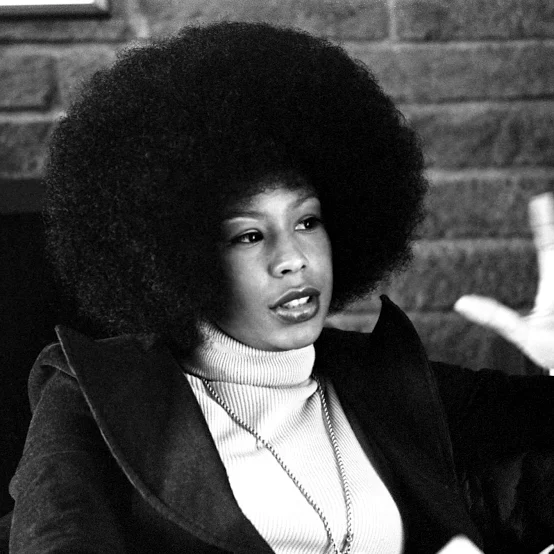
Marguerite Whitley is best known as O.J. Simpson’s first wife, but that simple label does not fully capture why people continue searching for her story. She entered the public eye through one of the most talked-about marriages in American sports and celebrity history, then stepped away from the spotlight and largely stayed there. Simpson married Whitley in 1967, and they had three children together: Arnelle, Jason, and Aaren. Their marriage ended in 1979, the same year their youngest child, Aaren, died in a drowning accident. That combination of fame, family, and tragedy is a big reason the name Marguerite Whitley still draws attention today.
Marguerite Whitley: Why Her Story Still Draws Readers In
What makes Marguerite Whitley so compelling is that her life sits at the edge of a much larger story. She was not a celebrity chasing headlines or a public figure building a brand around notoriety. Instead, she became known because she was close to a man whose life eventually became a major part of American pop culture, sports history, and criminal history. Once Simpson’s fame grew, Whitley’s life became harder to separate from the public image around him, even though she personally kept a low profile after the marriage ended. Vogue’s profile on her described her as Simpson’s high school sweetheart and noted that she disappeared from public view after their divorce.
There is also a human reason her name still gets searched so often: people are naturally curious about the lives of those who stand near famous figures but do not choose fame themselves. Marguerite Whitley represents that kind of quiet history. She was part of Simpson’s early life, part of his rise, and part of the family story that later came under intense public scrutiny. Yet instead of turning that attention into a public career, she appears to have chosen privacy. That choice has made her even more intriguing to readers who want to understand the person behind the headline.
The Early Years of Marguerite Whitley and O.J. Simpson
The story of Marguerite Whitley is deeply tied to the early years of O.J. Simpson’s life. Reports consistently describe them as high school sweethearts who knew each other long before Simpson became a national star. Their relationship began before the world knew him as “The Juice,” before football fame, movie roles, and the later legal storm that would define his legacy. That early connection matters because it shows that Whitley knew Simpson before the celebrity machine formed around him. She was part of the ordinary life that came before the extraordinary attention.
In 1967, while Simpson was still building his future at USC, he married Whitley. AP reported that he married his first wife, Marguerite Whitley, on June 24, 1967, and moved her to Los Angeles the next day so he could begin preparing for his first season with USC. Other coverage notes that they were very young and that the marriage took place during the beginning of Simpson’s ascent as an elite athlete. This detail helps explain why the relationship is still remembered: it was not just a marriage, but the beginning of a life lived beside a public rise.
For readers looking up Marguerite Whitley today, the early timeline is often the most important part of her story. She was there before the trophies, before the endorsements, before the later controversies. That kind of proximity to a famous life often turns private people into public curiosity, especially when the famous person’s story becomes a national obsession. In that sense, Marguerite Whitley is not just a name attached to someone else’s biography; she is part of the foundation of that biography.
Marriage, Motherhood, and Family Life
The marriage between Marguerite Whitley and O.J. Simpson produced three children and placed her at the center of a young family during a period when Simpson’s life was changing fast. People reported that the couple had three children together: Arnelle, Jason, and Aaren. Their family life was, for a time, the stable side of Simpson’s story, even as his professional football career was taking off and public attention began to grow. For any spouse, that would have been a lot to manage. For someone connected to an emerging superstar, it meant learning how to build a household while the outside world kept expanding around it.
Their children also became a lasting part of the public record. Arnelle later remained visible during some of the more difficult chapters of Simpson’s life, while Jason stayed far more private. Aaren’s death in 1979 was a devastating family tragedy and one of the most heartbreaking details connected to the Whitley-Simpson marriage. AP and People both noted that Aaren drowned in the family swimming pool when she was a toddler. That event, combined with the divorce that same year, made 1979 an especially painful turning point in Whitley’s life.
When people search for Marguerite Whitley, they are often looking for the emotional center of the story, not just the facts. Her life as a mother during those years is important because it adds depth to the public image of a woman who otherwise stayed quiet. Behind the headlines, there was a home, a marriage, and a family dealing with ordinary pressures and extraordinary loss. That is part of why her story remains memorable. It reflects how private life can be transformed by public fame without ever asking for it.
The End of the Marriage and the Shift in Public Attention
By the late 1970s, the marriage between Marguerite Whitley and O.J. Simpson had run its course. Reports consistently place their divorce in 1979. At roughly the same time, Simpson’s personal life was moving toward another relationship that would eventually become even more famous and more tragic in the public mind. People noted that Simpson later married Nicole Brown in 1985, after beginning to date her while still married to Whitley. That sequence became one of the most discussed parts of the Simpson story.
What stands out about Marguerite Whitley during this period is how little she seemed to seek attention for herself. While her ex-husband’s later relationships and legal troubles became nonstop public theater, Whitley remained outside the spotlight. Vogue described her as someone who disappeared from public view after the divorce. That privacy made her different from many people connected to celebrity stories, because she did not appear to be interested in publicity, interviews, or personal branding. Instead, she let the noise pass around her.
The transition out of the marriage also changed the way the public remembered her. Once Simpson’s later relationship with Nicole Brown came into the foreground, Whitley became, in the public imagination, the earlier wife in a much larger and more complicated narrative. That is an unfair simplification of any person’s life, but it is how celebrity culture often works. A private person can become a supporting character in a famous man’s story, even if she never wanted that role. Marguerite Whitley’s life after the marriage seems to reflect a quiet refusal to accept that role any longer than necessary.
Marguerite Whitley and the Question of Abuse
One reason Marguerite Whitley remains a subject of discussion is that later reporting connected her name to allegations about Simpson’s behavior. People reported in 2024 that a retired police officer described an alleged domestic violence incident involving Whitley and Simpson in the 1970s, while also noting that Whitley publicly denied any domestic abuse by Simpson. Vogue likewise reported that she maintained he never abused her. Because this part of the story involves allegations and denials, it is important to be careful: the public record includes competing accounts, and Whitley’s own public stance was a denial.
That complexity is part of why her story still attracts attention. The public often wants a simple answer: was the marriage happy, unhappy, abusive, peaceful, or volatile? Real lives rarely fit into one clean box. What is clear from the reporting is that Whitley did not present herself as someone eager to relive the past through the media. Even when Simpson’s history became a major topic again, she did not step forward as a repeated commentator. Instead, she remained a private figure whose words were treated as significant precisely because they were rare.
For SEO purposes, this is one of the strongest angles around Marguerite Whitley because readers searching her name are usually trying to understand the relationship between her and Simpson’s later public image. The most responsible way to cover that topic is to keep the focus on verified reporting and on Whitley’s own public denial, rather than on rumor. That approach keeps the article useful, trustworthy, and respectful, which matters both to readers and to search performance.
Life After O.J. Simpson: Privacy Over Publicity
After the divorce, Marguerite Whitley appears to have chosen a life that was as far from celebrity culture as possible. Vogue reported that she remarried twice after Simpson and stayed largely out of the public eye. That is an important part of her legacy because it shows that she was not permanently defined by one chapter of her life. She moved forward, kept her distance from media attention, and did not try to turn past proximity to fame into a public career.
This kind of privacy is not dramatic, but it is powerful. In a world where so many people build an identity around visibility, Whitley’s absence became its own statement. She did not need to explain herself to the public in order to live a full life. She did not need to become a commentator, memoirist, or celebrity spouse figure on television. The fact that so little is publicly known about her later years is not a gap in the story; it is part of the story. It tells us that some people endure public connection without ever surrendering their personal lives.
That choice also made her even more interesting to later audiences. The less she appeared in public, the more people wondered about her. That is a familiar pattern with famous families: the people who step away often become more mysterious than the people who stay visible. Marguerite Whitley seems to have understood that privacy can be protective. In her case, it also preserved a kind of dignity that stands out against the chaos surrounding Simpson’s later years.
Why Marguerite Whitley Returned to the Spotlight Years Later
Public interest in Marguerite Whitley rose again whenever Simpson’s life returned to the headlines. People’s reporting around his death in April 2024 renewed attention to the family he left behind, including the children from his first marriage. The renewed attention did not come because Whitley sought it; it came because any major turning point in Simpson’s life tends to pull old names back into the conversation. That is how public memory works around iconic and controversial figures.
Documentaries and retrospective coverage also helped bring her back into the public imagination. Vogue’s 2016 article on her followed renewed interest after the documentary O.J.: Made in America, which reminded audiences that Simpson’s first family existed long before the trial and the later cultural storm. That kind of documentary attention often creates a ripple effect: viewers search for the quieter people behind the famous figure, and Marguerite Whitley becomes one of those names that suddenly matters again.
Another reason her story continues to trend is that it reflects a broader public fascination with the unseen side of celebrity. Readers do not only want the headline events; they want the human connections underneath them. Whitley’s life touches on marriage, motherhood, grief, privacy, and reinvention. Those themes are timeless, which is why her name keeps resurfacing even decades after she left the spotlight.
What Readers Can Learn from Marguerite Whitley’s Story
The story of Marguerite Whitley is more than a footnote in someone else’s biography. It is a reminder that the people closest to famous lives are often the least interested in fame themselves. Whitley’s story suggests that privacy can be a form of strength, especially when life has included public scrutiny, family loss, and connection to a figure whose name has carried both admiration and controversy. She lived through a high-profile marriage, raised children in the shadow of celebrity, and then stepped away from the stage when the relationship ended.
There is also a lesson here about how public memory works. The public often remembers the loudest chapter first, but the quieter chapters may matter more in understanding a whole life. Marguerite Whitley’s life after the marriage, while less documented, is just as meaningful as her years beside Simpson. She appears to have chosen distance over drama, privacy over publicity, and family over fame. Those choices may not make headlines, but they make her story resonate with readers who value resilience and discretion.
For anyone creating content around Marguerite Whitley, that is the angle that works best for both readers and search engines. People want a biography that is respectful, clear, and genuinely informative. They want to understand who she was, why she mattered, and what makes her name continue to surface in search results. A well-written article should answer those questions without sensationalism and without losing the human side of the story.
Final Thoughts on Marguerite Whitley
Marguerite Whitley remains a fascinating figure because she represents the private side of a very public history. She was Simpson’s first wife, the mother of his first three children, and a witness to the earliest chapter of a life that later became one of the most analyzed in American media. Yet she did not build a public identity around that association. Instead, she stepped back, stayed mostly quiet, and allowed her life to move forward away from the spotlight.
That is why her name still matters. People search for Marguerite Whitley not only because of who she was married to, but because her story feels real, restrained, and human. It includes love, family, loss, and privacy. It also includes the rare kind of strength that does not need applause. If this story helped you understand her better, keep exploring more biography-style stories like this, share the article with others who are curious about the untold side of famous lives, and come back for more deeply researched profiles that go beyond the headline.



Post Comment