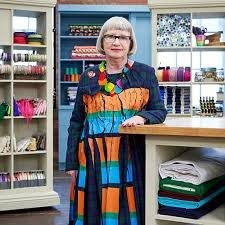
Esme Young is one of those rare creative names that keeps showing up in search results for all the right reasons. People look up Esme Young because they want more than a quick bio; they want to understand how one woman moved from fashion school to cult-label success, from film costumes to television, and from hands-on making to becoming a trusted voice in modern sewing culture. That long arc is exactly what makes her such an appealing topic for readers, especially for anyone who loves design, upcycling, personal style, or the craft of turning fabric into something unforgettable. Her story is not just about fame. It is about staying inventive, staying practical, and staying original for decades.
Esme Young: Why Her Creative Career Still Captivates Fashion Fans
When people search for Esme Young, they are often looking for the person behind the personality seen on The Great British Sewing Bee, but the real story starts much earlier. Born in 1949 and educated at St Martins, she became known as “Esme” after a tutor misread her name, and that small moment became part of a much larger creative identity. She later described being partially deaf as a child, which affected how she learned and how she saw the world, and that visual way of thinking seems to have shaped the distinctive eye she brought to fashion, costume, and teaching. In other words, the public figure people know today was built through years of making, observing, problem-solving, and experimenting rather than through any shortcut to celebrity.
That background matters because Esme Young did not arrive on television as a “fashion expert” in a shallow, trendy sense. She arrived there as someone who had already lived the craft from the inside. After graduating from Central Saint Martins, she co-founded Swanky Modes in Camden Town with three friends in 1972. The label was known for its bold, body-conscious, and unconventional clothes, and UAL notes that the work appeared in publications such as Vogue, Nova, Honey, 19, ID, and The Face. That alone tells you something important: Esme Young was never interested in safe, forgettable design. She helped create clothing that belonged to the cultural moment, clothing that looked alive, expressive, and a little rebellious. That sense of invention still defines her public image now.
Swanky Modes also matters because it shows how naturally Esme Young has always blended style with practicality. The Central Saint Martins archive describes how the team hunted for old fabrics and turned them into rainwear, bomber jackets, macs, and circle skirts, often from materials that others would have ignored. That is a key reason her name still resonates in an age obsessed with upcycling and sustainable fashion. Long before those phrases became marketing language, she and her collaborators were already working in that spirit: rethinking waste, seeing value in unusual fabric, and refusing to accept that fashion had to follow the same formula as the high street. The result was not just pretty clothing. It was clothing that carried attitude, wit, and a strong point of view.
The broader appeal of Esme Young is that she represents a kind of fashion intelligence that many readers crave but do not always know how to describe. She understands shape, texture, silhouette, movement, and wearability, but she also understands personality. That combination is part of why her career moved so naturally from clothes to costume design. According to United Agents, her work in film included Trainspotting, Bridget Jones’s Diary, The Beach, Black Sea, Two Faces of January, and A Monster Calls. These are not random credits; they show a designer who can translate a creative idea into a character’s visual language. The clothes do not merely dress the actor. They help tell the story. That is a very different skill from simply chasing trends, and it helps explain why her reputation has lasted.
One of the most recognizable pieces associated with Esme Young is the bunny costume from Bridget Jones’s Diary, which has become a kind of pop-culture shorthand for her film work. She has also been linked with the famous “Amorphous” dress from Swanky Modes, a design that appears in the Victoria and Albert Museum collection and is repeatedly referenced in accounts of her career. These details are important because they show the scale of her influence. Some designers are known mostly within industry circles, while others cross over into cultural memory. Esme Young belongs to the second group. Her work has entered the collective visual archive, which is why people who may never have studied pattern cutting still know her name, even if they first discovered it through television.
Her teaching career adds yet another layer to that reputation. UAL notes that she teaches innovative pattern cutting at Central Saint Martins, and that matters because it places her in the classroom as well as in the studio and on screen. A designer who teaches has to explain not only what works, but why it works. That often makes the best teachers the ones who have spent years solving real problems, because they can show students how to think through construction instead of merely copying an image. Esme Young’s teaching role also reinforces something else: she is not someone who treats creativity as a finished product. For her, fashion is a process, and the process is where the real intelligence lives. That idea runs through nearly every part of her career.
Her memoir, Behind the Seams: My Life in Creativity, Friendship and Adventure, published in 2022, gave readers a fuller view of the life behind the public persona. The book’s official description and interviews around it describe a path that begins with drawing, continues through childhood hearing difficulties, moves into student life at St Martins, and then into the excitement and uncertainty of building a creative career in London. That memoir is significant not just because it is autobiographical, but because it helps explain why Esme Young feels so relatable to readers. She does not present creativity as a fairy tale. She presents it as a lived, sometimes messy, always energetic practice. That honesty is part of the appeal. It makes her feel accessible without making her work any less impressive.
There is also a strong human-story element to Esme Young that many readers connect with. In SheerLuxe’s interview, she talks about being partially deaf as a child, learning to read later than some children, and relying heavily on visual thinking. That kind of detail matters because it turns her from an abstract “fashion figure” into someone whose strengths were built alongside real obstacles. It also helps explain her sharp eye. When someone depends on visual observation, they often become intensely attuned to proportion, shape, and detail, and those are exactly the qualities that define a good fashion judge, a good pattern cutter, and a good costume designer. In that sense, her career is not simply a list of achievements; it is a coherent expression of how she sees the world.
Her role on The Great British Sewing Bee is a major reason the phrase Esme Young remains such a strong search term today. United Agents states that she joined the show in 2016, and UAL confirms the same timeline. The show’s wide audience means millions of viewers have come to know her through a format that rewards honesty, expertise, and a little humor. On screen, she is not there to flatter people or to turn sewing into a sterile competition. She is there to evaluate, encourage, and tell the truth about what works and what does not. That combination has made her a beloved judge, especially among viewers who appreciate craft over hype.
What makes Esme Young especially useful as a modern reference point is that her judgment style is grounded in principle rather than performance. In SheerLuxe, she says the most important things are silhouette, fabric choice, and sewing technique, and she emphasizes that mistakes are part of learning. That is a powerful message for readers and for sewists alike. It suggests that strong creative work is not about perfection on the first try. It is about making informed decisions, understanding materials, and accepting that skill grows through practice. This is one of the biggest reasons she has become more than a television personality. She has become a teacher of creative values.
Her style also contributes to her continued popularity. Esme Young is instantly recognizable for her sharp bob, distinctive glasses, and fearless use of color and pattern, and those choices communicate the same message as her career: originality is not something to hide. It is something to wear, literally and creatively. That visual confidence is part of why she photographs so well and why audiences trust her taste. She does not present herself as a polished brand clone. She presents herself as someone with a point of view. For readers, that is refreshing. In an era when so many public figures look carefully manufactured, Esme Young feels lived-in, practical, and delightfully unbothered by the pressure to fit a template.
Another reason people keep returning to Esme Young is that her story fits into several overlapping interests at once. Fashion fans admire her design background. Sewing enthusiasts value her technical knowledge. Television viewers know her from Sewing Bee. Cultural readers know her from film costume work. And anyone interested in women who built creative careers on their own terms can find something inspiring in the way she moved through the industry. That kind of cross-interest appeal is powerful for search as well as for storytelling, because it means the topic speaks to more than one audience. A strong article about Esme Young does not need to isolate one career chapter; it should show how the chapters connect.
If you look closely, Esme Young’s whole career is built around the same core idea: make something interesting out of what is available, and make it with conviction. That philosophy appears in Swanky Modes, in her film work, in her teaching, and in the way she speaks about sewing. It is easy to see why this resonates now, because readers are increasingly drawn to authenticity, sustainability, craftsmanship, and creative independence. Esme Young embodies all four. She did not become significant by sounding like a brand. She became significant by staying curious, staying practical, and keeping her own voice intact through changing trends and changing industries. That is a lesson many content creators, fashion lovers, and hobby sewists can learn from her.
Her influence also extends into how people think about age and creativity. Esme Young is proof that creative relevance does not expire when someone gets older. In fact, her career may be more visible now than ever because her perspective has had time to mature. She brings authority without stiffness, and she brings experience without losing playfulness. That balance matters in the modern media landscape, where audiences are hungry for voices that feel seasoned rather than scripted. It is one of the reasons she works so well as a judge and why her name continues to generate interest among people who want inspiration that feels both stylish and substantial.
From an SEO perspective, the phrase Esme Young earns attention because it sits at the intersection of biography, fashion history, entertainment, and education. Readers searching that keyword are often asking layered questions: Who is she? What did she design? Why is she on Sewing Bee? What is her style? What has she made? Those are all good search-intent signals, and they show why a full-length article works better than a shallow summary. The most useful content gives the reader context, not just facts. It explains how a designer from St Martins became a cult-label founder, then a costume creator, then a TV judge, and finally a recognizable voice in British creative culture. That narrative depth is what keeps a page useful long after a quick news item has faded.
Esme Young also represents something that many searchers are quietly looking for when they type a name into Google: a sense of possibility. Her story shows that a creative life does not have to move in a straight line. It can include school, experimentation, collaboration, set-backs, film sets, classrooms, television studios, and books. It can move from making clothes nobody else would sell to helping millions of viewers understand why fabric, silhouette, and construction matter. That kind of journey is inspiring because it feels earned. It is not built on a single viral moment. It is built on decades of work that kept making sense in new contexts.
For readers who love fashion or sewing, the practical takeaway from Esme Young’s career is simple: creativity improves when you understand materials, stay curious, and stop waiting for permission. Her work encourages experimentation, but it also respects technique. That is a rare and useful combination. It means fashion can be adventurous without becoming careless. It means a handmade garment can still feel modern. It means an older creative voice can still feel fresh. Those ideas are part of why her audience keeps growing and why searches for her name remain strong. She is not only a name from the past or a personality from television. She is an active reference point for how to make things well and with personality.
In the end, Esme Young stands out because she has managed to make expertise feel exciting. She has never needed to oversell herself. Her work speaks through the clothes, the costumes, the teaching, the memoir, and the unmistakable confidence of someone who has spent a lifetime looking closely at how things are made. That is why readers, sewists, and fashion fans continue to search her name, and that is why her story deserves a full article rather than a passing mention. If you care about creativity that lasts, originality that feels lived-in, and fashion that tells the truth about its maker, Esme Young is exactly the kind of figure worth studying, sharing, and remembering.
If you are building content around fashion icons, sewing inspiration, or British creative culture, this is a perfect topic to keep on your site, revisit with fresh internal links, and promote across social media. Share the article with readers who love design, encourage them to discover Behind the Seams, and invite them to watch The Great British Sewing Bee with a sharper eye for construction and craft. A strong story like this does more than rank; it keeps people reading, clicking, and coming back for more.


Post Comment