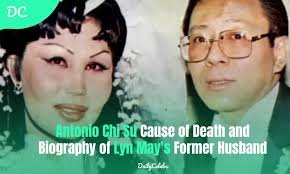
Antonio Chi Su: Why This Name Still Draws Attention
Antonio Chi Su is one of those names that keep appearing in searches because the public record around him is limited, but the story connected to him is emotionally powerful. Available reporting identifies him as a Mexican-Chinese businessman who became widely known through his marriage to Mexican vedette Lyn May, along with the restaurant business they built together in Mexico City. Much of the coverage about him focuses on that relationship, his role as a restaurateur, and the illness that eventually ended his life, which is why the name continues to attract readers looking for a clearer, human-centered explanation.
That is exactly what makes Antonio Chi Su such a compelling topic for a blog. His story is not about a celebrity who spent decades in the spotlight with a long public paper trail. Instead, it is about a man whose life became visible through love, family, work, and the emotional legacy he left behind. For readers, that makes his name more than a search term. It becomes a doorway into a story about culture, marriage, grief, entrepreneurship, and the quiet kind of influence that rarely gets enough attention online.
Publicly available coverage suggests that Chi Su and Lyn May met in the 1980s and later married in the late 1980s, with one widely cited account saying they met in 1989 and spent roughly 25 years together. Reporting also says they opened a Chinese restaurant in Mexico City, and that Chi Su was later diagnosed with prostate cancer in 2004 before dying in 2008. Because different outlets spell his surname differently, you may see Antonio Chi Su, Antonio Chi-Xuo, or Antonio Chi Xuo in coverage about the same person.
Antonio Chi Su and the Power of a Personal Legacy
The reason Antonio Chi Su remains interesting is that his legacy sits at the intersection of public curiosity and private memory. In many biographies, a person is remembered for awards, headlines, or dramatic career milestones. Chi Su’s story is different. The details available to the public are fewer, but they are meaningful: a marriage that lasted decades, a business that became part of the city’s dining scene, and a life cut short by cancer. That combination gives the story emotional weight, especially for readers who are drawn to the real lives behind familiar names.
A good blog about Antonio Chi Su should not pretend to know more than the sources reveal. In fact, one of the most responsible ways to write about him is to recognize that public reporting is centered mainly on his adult life, not a fully documented childhood or early education. That is not a weakness in the story. It is part of why readers keep searching for him. When information is scarce, people want context. They want the fuller shape of a life, not just a headline.
What makes the story especially compelling is the emotional contrast. On one side, there is the practical world of business, food, and entrepreneurship. On the other hand, there is the intimate world of love and loss. Those two sides come together in the public reporting about Chi Su, and together they form a story that feels much bigger than a name on a search result page. For SEO purposes, that is valuable because readers do not only search for facts. They search for meaning, and Antonio Chi Su’s story offers plenty of it.
The Restaurant Story That Helped Define Antonio Chi Su
One of the most consistent details in the available reporting is that Antonio Chi Su was a restaurateur. Sources describe him as the owner of a Chinese restaurant in Mexico City, including a location on Avenida Bucareli, and some accounts say the business became a place where his work and his relationship with Lyn May were closely tied together. That detail matters because restaurants are never just businesses. They are meeting points. They are cultural bridges. They are places where identity, taste, and memory all live side by side.
That is why the restaurant chapter of his life stands out so strongly. A Chinese restaurant in Mexico City is more than a food business; it reflects migration, adaptation, and the blending of traditions. Even when the public record does not give every operational detail, the broad story is clear enough to understand the significance. Chi Su was part of a multicultural environment where food became a shared language, and that made his work meaningful beyond the cash register.
It is also important for readers to understand that restaurants often become community landmarks in a way that other businesses do not. People remember where they ate, who owned the place, who greeted them, and which stories were attached to the tables. That is likely one reason Antonio Chi Su still appears in searches years later. His name is connected to a real place, a real partnership, and a real period of life that many readers want to revisit. That kind of memory has long-term SEO value because it keeps search interest alive over time.
Antonio Chi Su and Lyn May: A Marriage Readers Still Search For
For most people searching his name, Antonio Chi Su is inseparable from Lyn May. Reporting consistently identifies him as her husband, with the couple married in the late 1980s and together for roughly 25 years. Some sources describe their bond as especially deep, and their story has remained in the public eye because Lyn May has spoken openly about how much his death affected her. That public emotion is one reason the search interest continues, since readers are often looking not only for biography but also for the love story behind the name.
Their relationship also gives the story a strong human angle. Lyn May is a well-known figure in Mexican entertainment, so when readers look up her life, Antonio Chi Su often appears in the same search path. That connection keeps his name relevant even years after his death. In practical SEO terms, this is powerful because the search phrase “Antonio Chi Su” often carries a built-in curiosity about celebrity, romance, and loss. Readers want to know who he was, why he mattered, and what happened to him.
The emotional force of the relationship became even more visible when Lyn May later described her grief after his death. Multiple reports say she spoke publicly about exhuming his body and sleeping beside him during her mourning, a detail that shocked many readers and dramatically increased interest in his name. However readers feel about that confession, it demonstrates how deeply Chi Su mattered to her and how strongly his memory remains tied to her public story.
That kind of emotional detail can be difficult to write about, but it is part of the reason Antonio Chi Su keeps reappearing online. The story is not only about his life. It is about how a life continues after death, inside the memory of another person, inside public conversation, and inside the digital archive that search engines index over and over again.
What Public Reporting Says About His Final Years
The most widely repeated factual points about Antonio Chi Su’s final years are consistent across several outlets. Reporting says he was diagnosed with prostate cancer in 2004 and died in 2008 after a long struggle with the disease. Some articles describe Lyn May as inheriting the restaurant business after his death, while others focus on the emotional aftermath of losing him. Those are the facts that appear most often and should anchor any accurate blog post about his life.
When you write about a person like Chi Su, it helps to keep the tone respectful and factual. Sensationalism may get clicks for a moment, but it usually weakens trust. Readers searching for Antonio Chi Su are likely looking for clarity, not exaggeration. That means the best SEO approach is to stay close to what can be verified: the marriage, the restaurant, the illness, the death, and the lasting public interest around his story.
The cancer chapter is also important because it changes the emotional shape of the story. He was not simply a business figure or a husband in a famous relationship. He was someone who endured a serious illness, and that struggle is part of why his name remains connected to grief and remembrance. Many readers resonate with that because cancer has touched so many families. In that sense, Chi Su’s story becomes more universal than it first appears.
A strong blog can use that universality without losing specificity. You do not need to invent extra details to make the story meaningful. The public record already gives enough material to write something emotionally honest: a marriage built over decades, a business life rooted in the city, and a final chapter marked by illness and loss. That is real narrative value, and it is often more compelling than a long list of unverified claims.
Why Antonio Chi Su Still Ranks in Search
From an SEO perspective, Antonio Chi Su is the kind of topic that can rank well when handled carefully. It has a clear name, a strong emotional hook, a celebrity connection, and enough public curiosity to create recurring searches. It also has a long-tail advantage because people search many related phrases, including who he was, whether he was Lyn May’s husband, what happened to him, and whether the restaurant story is true. Those search patterns make the topic ideal for a comprehensive, well-structured article.
Another reason the name continues to surface is spelling variation. Some publications use Chi Su, others Chi-Xuo, and others Chi Xuo. When names are inconsistent across sources, search traffic often fragments and then recombines through related results. That means a well-optimized article should naturally include those variants while still keeping the main focus keyword prominent. Doing that helps search engines understand the topic and helps readers recognize they are in the right place.
Search engines also reward clarity, and clarity matters a lot here. If someone clicks an article with the promise of “Antonio Chi Su biography,” they expect a direct explanation, not vague filler. They want the background, the relationship, the business, the illness, and the legacy in one readable place. That is why a strong SEO article should be comprehensive and easy to follow, with clean headings and enough depth to satisfy the reader on the first visit.
That said, a responsible ranking strategy is never just about keyword repetition. It is about usefulness. A useful article gives readers context, accurate detail, and a reason to stay on the page. Antonio Chi Su is a perfect example of a search topic where depth matters more than hype. The more respectfully and clearly the story is told, the stronger the user experience becomes.
What Readers Can Learn From Antonio Chi Su’s Life
Antonio Chi Su’s story offers a few practical lessons that go beyond biography. The first is that not every meaningful life is widely documented. Some people leave their strongest mark in smaller, more personal ways: through a family, a business, a relationship, or a community space. Chi Su appears to fit that pattern. He is remembered not because he dominated headlines, but because the people closest to him and the culture around him kept his memory alive.
The second lesson is that identity can be a bridge. Public reporting repeatedly presents Chi Su as a Mexican-Chinese entrepreneur, and that multicultural identity is central to how his life is understood. In a city like Mexico City, where food and culture constantly intersect, that background matters. It helps explain why his restaurant story has such appeal and why the public still finds his name interesting today.
The third lesson is about memory and grief. Lyn May’s public comments about his death, including the shocking details she shared years later, show that mourning does not always follow neat rules. People grieve in ways that can feel strange to outsiders but deeply sincere to those experiencing them. Whether readers focus on the romance, the sadness, or the controversy, the result is the same: Antonio Chi Su is remembered through emotion as much as fact.
The final lesson is that a name can keep living long after the person is gone. That happens when the life story is connected to another public figure, a local business, and a memorable emotional legacy. Antonio Chi Su has all three. That is why people still search for him, and that is why a well-written article can still find an audience years after his death.
Antonio Chi Su in the Broader Context of Mexican Entertainment and Culture
Although Chi Su was not himself an entertainment celebrity in the way Lyn May was, his story belongs in the larger world of Mexican popular culture because of how often it appears alongside hers. That connection matters. Search interest often grows around the public lives of entertainers, and the people closest to them become part of the conversation. Chi Su’s name entered that world through marriage, but it stayed there because the emotional story around him remained memorable.
His restaurant business also places him in a cultural crossroads. Chinese-Mexican culinary influence is not just a niche topic; it reflects broader patterns of migration and adaptation that shape city life. A restaurant can become a cultural meeting place where traditions mix naturally. That makes Chi Su’s business story relevant not only to celebrity readers but also to anyone interested in how food reflects identity.
This is why the Antonio Chi Su story has lasting content value. It can be approached from multiple angles: biography, love story, food culture, grief, and even search behavior. That versatility is useful for publishers because it allows the article to serve many reader intents at once. Some people arrive for the name. Others arrive for Lyn May. Others arrive for the restaurant history. A strong article can meet all three needs without losing focus.
For readers, that means the story feels layered rather than flat. It is a biography with a human pulse. It is a business story with a personal center. It is also a reminder that even people with relatively little public documentation can leave a meaningful imprint when their lives touch culture in visible ways. That is the kind of content that keeps readers engaged and encourages them to trust the site that published it.
Why a Well-Written Antonio Chi Su Article Can Attract New Visitors
If the goal is to bring in new visitors, this topic has several built-in advantages. The first is curiosity. Readers often search names they have heard in passing but do not fully understand. The second is emotional depth. Stories involving love, illness, and remembrance invite longer reading time. The third is search variation. Because Chi Su’s name is written in multiple ways online, a thorough article can capture a wider set of search queries than a narrow one.
A click-worthy article should therefore promise clarity, not drama for drama’s sake. Readers are more likely to stay when the content feels trustworthy and complete. For Antonio Chi Su, that means explaining who he was, what he did, how he became connected to Lyn May, and why people still care. Those are the questions behind the clicks, and answering them well is what turns curiosity into engagement.
This is also where a strong CTA matters. After readers finish the article, they should feel invited to explore more, share the post, or leave a comment. A topic like this works especially well when the closing message encourages readers to reflect on legacy, love, and memory. That emotional landing makes the content feel finished while still nudging the visitor toward another action on the site.
In other words, the article should do more than rank. It should connect. Antonio Chi Su’s story is memorable precisely because it connects so many different threads into one name. When a blog captures that correctly, it becomes useful to readers and attractive to search engines at the same time.
Final Thoughts on Antonio Chi Su
Antonio Chi Su is remembered today as a Mexican-Chinese entrepreneur, a restaurateur in Mexico City, and the husband of Lyn May. Public reporting places his marriage in the late 1980s, notes that he and Lyn May opened a Chinese restaurant together, and says he battled prostate cancer after a 2004 diagnosis before dying in 2008. Beyond those facts, the public record is limited, but the emotional legacy is not. His story continues to live because people still care about the human side of it.
That is why Antonio Chi Su remains a strong SEO topic. It is specific enough to target, emotional enough to hold attention, and meaningful enough to inspire reflection. Readers do not just want a name explained. They want a story that feels real. Chi Su’s life, though not heavily documented, offers exactly that: a reminder that ordinary-seeming details like a restaurant, a marriage, and a final farewell can become unforgettable when they are tied to love and memory.



Post Comment