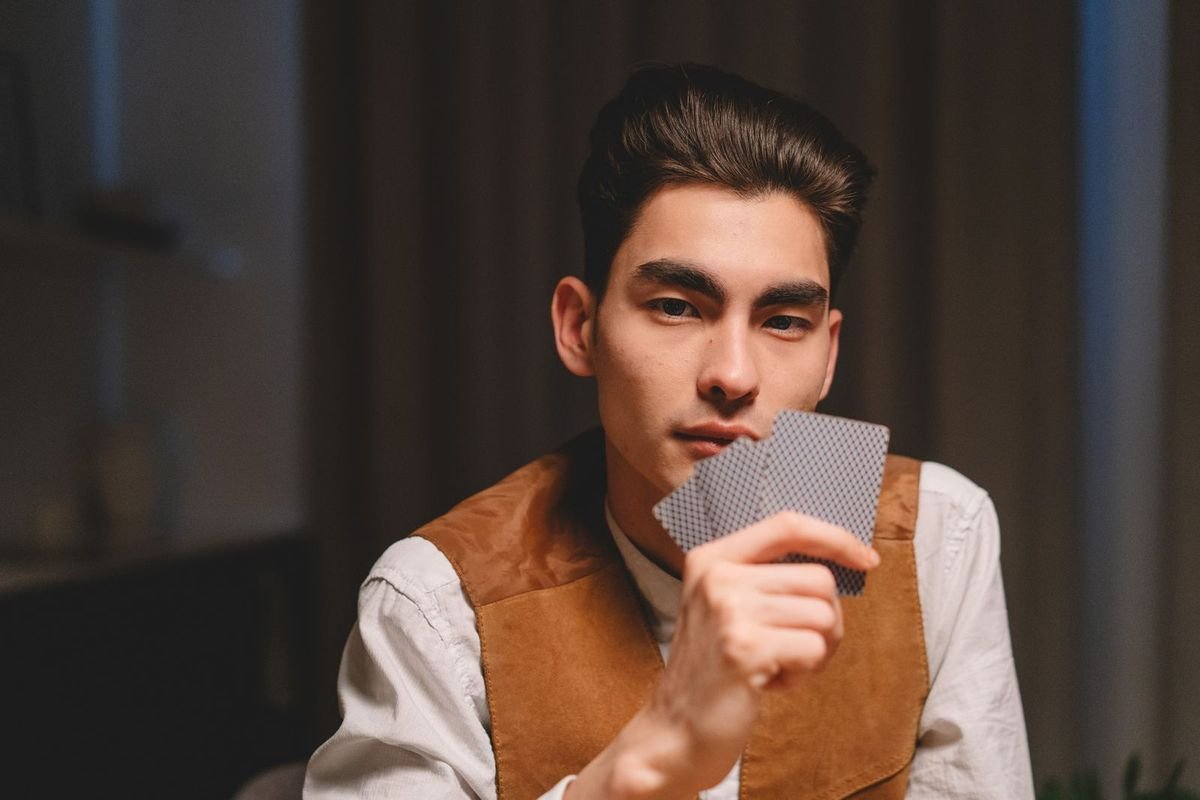
What Is a Poker Tell? How to Spot Hidden Signals
I still remember watching a man lose a big pot because of his hands. He had a monster hand and tried to look bored, but his fingers trembled as he stacked his chips. He didn’t say a word. He didn’t have to.
That night taught me what no strategy book had: poker is a people game as much as a card game. So what is a poker tell, really? It is one of those little signals, and once you learn to notice them, you will never watch a poker table the same way again.
Table of Contents
What Is a Poker Tell, Exactly?
At its simplest, what is a poker tell? Any habit, movement, or pattern that gives away information about a player’s hand. It can be physical, like a shaking hand or a sudden change in breathing, or about betting, like a player who always bets big when bluffing and small when strong. It can even be as small as the way someone looks at their chips after the flop lands.
Most tells are not deliberate. Nobody sits down planning to twitch every time they hit a flush. Tells leak out because poker is stressful, and the body is terrible at keeping secrets under adrenaline.
A tell is never a guarantee — just a clue. A shaking hand usually means a strong hand, but sometimes it just means too much coffee.
Why Players Give Tells Away Without Realising It
Knowing what is a poker tell is one thing; understanding why they happen is what actually helps you. Your brain has limited attention, and poker eats most of it. When you are working out pot odds and deciding whether to raise, little brainpower is left for controlling your body language.
Adrenaline plays a huge part too. A big hand triggers the same fight-or-flight response as any stressful moment: faster heartbeat, changed breathing, shaky hands. You can train yourself to hide a lot of this, but you cannot switch off adrenaline entirely.
Most of us have habits we do not even know about — a glance at your chips when you like the flop, sitting up straighter when you bluff. You would never notice, but a watchful opponent will.
The Shaking Hand: The Most Famous Physical Tell
The first time someone explained what is a poker tell to me, they pointed at a shaking hand and said, “That man is not bluffing.” When a player’s hand shakes while pushing chips into the pot, it is usually because they have a very strong hand and adrenaline is flooding through them. A bluffer, on the other hand, is usually trying hard to look calm, and their hands are often strangely still.
That said, be careful. Some people have naturally shaky hands, or are nervous for reasons that have nothing to do with their cards. Watch for a change: a player steady all evening who suddenly trembles on a big bet is telling you something. If their hands shake every hand, ignore it.
The same logic applies to chip handling. A player with a strong hand handles chips confidently; a player who is unsure might fumble or count and recount their stack. Look for the change from their normal behaviour, not the behaviour itself.
Breathing, Eyes, and the Things You Can’t Control
If hands are the most famous tell, breathing is the one most players forget about. When someone picks up a huge hand, their breathing often changes — they might hold their breath, breathe faster, or suddenly go very still. I have seen chatty players go completely quiet and rigid the second they look at their hole cards.
Eyes are another giveaway, and a tricky one. The old idea is that a player who stares at you is bluffing, while one who avoids eye contact has a good hand. There is some truth in that, but it is far from a rule. Watch for a change in the pattern — a player looking around all night who suddenly locks eyes with the flop.
The most reliable eye tell I have seen is the glance at the chips. After the flop, a player who has hit it will often glance — just for a split second — at their own chips, already thinking about the bet. It is quick, unconscious, and very hard to fake.
Chips, Cards, and Posture: What Hands and Bodies Reveal
Beyond the obvious shaking and staring, smaller physical tells build up over a session. Posture is a big one: a player who suddenly sits up straight and leans towards the table is usually interested in the hand, while one who slumps back or crosses their arms has often already decided to fold.
The way someone protects their hole cards can be revealing too. Some players guard their cards closely with a strong hand; others leave a weak hand carelessly exposed because they have already mentally thrown it away. Neither is a certainty, but patterns emerge over a long session.
Then there is the classic chip shuffle. Plenty of players fiddle with their chips out of habit, and for them it means nothing. But watch for the player who stops shuffling when the action reaches them — that sudden stillness means they are concentrating hard.
Betting Tells: Timing and Bet Sizing
This is where asking what is a poker tell stops being theory and starts being money, because betting tells are where most of the real information lives. The chips are where players commit, and how they commit tells you a lot.
Timing is the first thing to watch. A player who bets instantly is often either very strong or very weak — they decided before the action reached them. A player who takes a long time and then bets big is often trying to look uncertain when they are not. And a quick caller is often drawing, hoping to see the next card cheaply.
Bet sizing is just as revealing. Some players bet small with strong hands because they want a call, and big when bluffing because they want folds. Others do the exact opposite. The size itself does not matter — what matters is the pattern. Once you spot it, you have found something worth real money.
Table Talk: When Words Give the Game Away
Some players cannot help talking, and the way they talk is often more revealing than their hands. A player who suddenly starts chatting — cracking jokes, asking about your holiday — right after a big bet is often trying to look relaxed when they are anything but. A genuinely strong player who wants a call will often go quiet instead.
The words themselves can give things away too. Listen for “I suppose I’ll call” or “I guess I have to bet” in a reluctant voice. That sighing language usually means the opposite of what it sounds like — they are happy with their hand and want you to think they are not.
Silence is a tell in its own right. If a player who has been talking all evening suddenly clams up when a big pot is building, pay attention — they might have a huge hand, or be deep in thought about a bluff. Either way, the silence is information.
Online Poker Tells: Timing and Bet Patterns
Online, what is a poker tell when there is no face to watch and no hands to shake? Tells do not disappear online — they just change shape. You cannot see a trembling hand through a screen, but you can see timing, and timing is brutally honest.
The most common online tell is the instant check. If a player checks the moment the action reaches them, they have almost certainly ticked the “check/fold” box in advance — a weak hand, already given up on. A player who pauses long and then raises big is often trying to look uncertain — and the longer the pause, the more likely they hold something worth thinking about.
Bet sizing patterns are even more important online, because they are the main thing you can actually see. Many players fall into rigid habits: half the pot with a decent hand, the full pot when bluffing, a min-raise with a monster. Use the notes feature to build a profile of each regular over time.
How Reliable Are Poker Tells, Really?
Once you understand what is a poker tell, the temptation is to trust every twitch you see — and that is exactly where most players go wrong. Tells are real, but they are not magic. No single tell is reliable enough to base a big decision on by itself.
The problem is that tells are noisy. A shaking hand might mean a strong hand, or too much coffee. A long pause might mean a tough decision, or a dropped connection. Good players know this, and the best ones deliberately fake tells — acting nervous with a weak hand, or bored with a monster — to trap opponents who over-trust their reads. If you want the maths behind the game rather than just the psychology, the Wizard of Odds has a solid breakdown of poker rules and odds.
So how should you actually use tells? Treat them as a tiebreaker, not a deciding factor. Start with the fundamentals — the betting, the position, the cards on the board — and only then let a tell nudge you. And always find a baseline first: you cannot spot a change in behaviour until you know what normal looks like. Spend the first half hour of any session just watching.
Poker Tells in Movies vs Reality
Films love the idea — but what is a poker tell in a movie versus at a real table? In the movies, tells are dramatic and obvious: a twitch, a glance, swelling music, and the hero wins the pot. The most famous example is the Oreo cookie tell, where a player eats a cookie a certain way whenever he bluffs. Great cinema — complete nonsense as a guide to real poker.
In reality, tells are far subtler and messier. Nobody announces their hand with a cookie. Real tells are small: a glance half a second too long, a breath that catches, a bet ten chips bigger than usual. And they are often contradictory — the same player might shake when strong one night and nervous the next. The movies give you a puzzle with one clean answer; real poker gives you five possible answers.
The films still capture something true: poker is a game of people, not just cards. Just do not walk into a casino expecting to spot a cookie tell — you will be waiting a long time, and losing money while you wait.
How to Hide Your Own Tells
The best way to hide your own tells starts with knowing what is a poker tell in your own game — watching yourself the way you watch everyone else. Most players never do this. They spend all their energy reading the table and never notice that they glance at their chips every time they hit the flop, or go quiet whenever they bluff. Ask a friend to watch you play, or record a home game — you will be amazed at what you find.
Once you know your tells, the fix is usually simple. Build a routine and stick to it, whatever your cards are: look at your hole cards the same way every time, take the same few seconds before every decision, handle your chips the same way whether you are strong or weak. The goal is not to look like a robot — that is a tell in itself — but to give your opponents the same picture every hand.
Sunglasses and a hoodie do work for hiding your eyes — though they can also make you look like you are trying too hard, which is its own kind of tell. Breathing slowly before a big decision keeps the adrenaline in check. And once you have looked at your cards, do not look at them again: players who keep re-checking usually have something good and cannot quite believe it.
Remember, you are paying to sit there — the house takes a cut from every pot, and if you have ever wondered what a poker rake is, it is the fee the casino or cardroom charges for running the game.
Conclusion
So, what is a poker tell at the end of the day? A small, human leak — a shake, a glance, a pause, a bet slightly too big — that tells the table something the player never meant to share. Tells are not magic, and they will not make you a winning player on their own. But combined with solid fundamentals and a habit of watching people instead of cards, they are one of the most satisfying skills in the game.
The real joy is not even the money. It is that moment when you look around a table and realise you are seeing things others are missing — the held breath, the glance at the chips, the sudden silence. Poker stops being just a card game and becomes a conversation, and the tells are the parts nobody meant to say out loud.
Frequently Asked Questions
What is a poker tell in simple terms?
A poker tell is any small habit that gives away information about a player’s hand — a shaking hand, a change in breathing, a betting pattern. Most tells are unconscious, which is why they are so hard to hide and so valuable to spot.
Can you really win at poker just by reading tells?
No, tells alone will not make you a winning player. Use them as a tiebreaker alongside fundamentals like position, pot odds, and hand reading. A player who relies only on tells will lose money to anyone who plays the maths well.
Are poker tells real or just a movie thing?
They are real, but much subtler than the films suggest. Real tells are small: a glance at the chips, a pause before betting, a change in posture. The dramatic tells you see in movies are invented for the screen.
What is the most common poker tell?
The shaking hand is the most famous, and it usually means a strong hand, because adrenaline makes the hands tremble when a player has a monster. Betting patterns are just as common, though — a player who always bets a certain size with a strong hand is giving away far more than they realise.
How do I stop giving away tells myself?
Build a consistent routine and use it every hand: look at your cards the same way, take the same time to act, handle your chips the same way whether strong or weak. Watching yourself play is the fastest way to find the habits you did not know you had.
Gamble responsibly. 18+ only.
Post Comment